



– Expand space by 2-3 times with ceiling bed and wall storage
-The limitations of space realized during the pandemic, solved with robotics
“My home has become a prison.”
It was a common feeling of frustration felt by people around the world at the beginning of the 2020 pandemic.
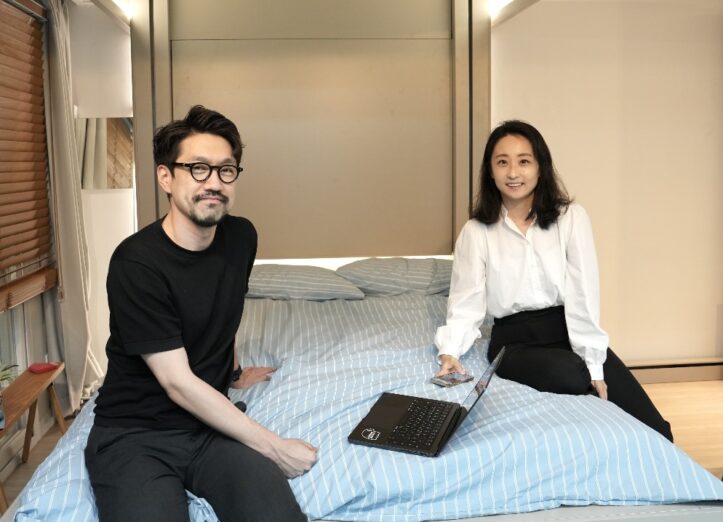
The house that should be a comfortable shelter felt like a prison from which one could not escape. Especially for the 2030 generation living in a 4-pyeong studio in Seoul, staying in a house with all sides blocked off is close to torture. The cramped reality of having to move the bed to make room for a desk, and moving it to make room for activities is difficult. It is a vicious cycle where real estate prices are skyrocketing and space is becoming narrower.
There is a startup that has stepped forward to solve this problem head-on. It is called ‘Rovothome’. The ‘Roboterior’ technology they have developed allows a 4-pyeong space to be used as if it were 12-pyeong with a bed that comes down from the ceiling and a closet that comes out of the wall. It is not just a fantasy. They have already secured 17 billion won worth of letters of intent to purchase from construction companies, developers, and individual customers, and have also received about 4.5 billion won in support from the government.
“Space should not limit people, but change for people.”
Kang Hee-jin, CEO of Robotom, whom we met at the office in Munrae-dong, concisely explained her philosophy. Having formed a relationship with co-founder Yoon Se-yong while serving as the president of the Yonsei University Department of Architecture student council, she has worked in space consulting, an architectural firm, and a Silicon Valley proptech startup. She has accumulated experience crossing the boundaries of architecture, technology, and business, and is an architectural expert who has personally traveled to over 70 cities and pondered over ‘space.’
“When the pandemic hit in 2020, people all over the world used the expression ‘trapped’ in their homes. It made me realize that homes are not spaces for people, but rather, they are restricting their lives.”
The problem was not simply the area. Kang Hee-jin analyzed that the narrow environment, fixed spatial structure, and limitations in performing multiple functions properly in one space were a complex factor.
“With real estate prices skyrocketing, owning more space is no longer easy. So I thought we needed to change the way we use space.”
The core of Robo Terrier is ‘physical space transformation’. If existing smart homes were limited to IoT remote control of lighting or home appliances, Robo Tom’s technology actively expands the space itself. ‘Ceily’, the representative product of Robo Tom’s brand Stagehands, is a bed that is raised from the ceiling that comes down only when needed to create a bedroom, and can be used as a living room during normal times. ‘Wally’ is a wall-mounted furniture that moves to be used as storage space during normal times, and as a desk or dining table when needed.
“The thing that was technically important and tricky was ‘noise.’”
For robot furniture to be used in living spaces, it had to be quiet above all else. CEO Kang Hee-jin laughed and said, “An object weighing over 100 kg is moved several times a day. If it was noisy, who would use it?”
Rovothome’s self-developed drive unit has reduced noise to 41dB (library level). It also has a triple safety device. It detects users in advance with a non-contact sensor to prevent collisions, and stops immediately in the event of an unexpected impact with real-time torque detection. It also prevents deviation from the path with an automatic angle correction algorithm.
“It stops immediately if it detects even a light push with two fingers. The goal is to become a natural part of the home so that users don’t even recognize it as a robot.”
The market response is hot. Rovothome has secured letters of intent to purchase worth 17 billion won from construction companies and developers. Initially, it was targeting small residential spaces of about 4 pyeong, but recently, inquiries are pouring in from small and medium-sized apartments in Gangnam.
“A male customer in his 50s who lives in a 30-pyeong apartment in Gangnam worth over 2 billion won contacted us. He said that although his house is large, his only space is a room filled with beds. Another customer wanted our product to separate his space because his child keeps lying down on the bed when he tries to study at home.”
CEO Kang Hee-jin said, “What’s important is personalization beyond the expansion of space,” and added, “We are planning a product line that suits various lifestyles, such as Study Ceily (for students) and Collector’s Wally (for collectors).”
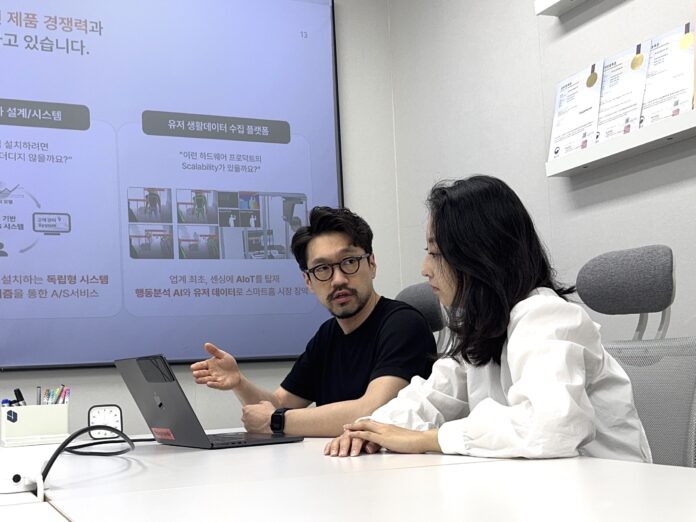
The business model is also innovative. Rovothome is preparing a subscription service along with product sales. It is planning a service where users can rent robot furniture for 100,000 to 200,000 won per month and replace small furniture that is combined with it.
“I think that just because deep tech is premium, the price shouldn’t be just for premium consumers. We plan to stabilize prices by introducing a mass production system starting in 2025.”
Global expansion is also in full swing. Robotom is targeting Singapore, Japan, and North America as its main targets. These regions are all places where housing costs and space shortages are serious.
Singapore has one of the highest rents for single-room apartments in the world. Japan has the highest rate of growth in single-person households, especially in Tokyo.
CEO Kang Hee-jin’s unique philosophy also stands out in the way the organization is run.
He currently has a team of 15 and says that the philosophy behind his organization is based on the verse, “Love like you’ve never been hurt.”
“This is what CEO Yoon Se-yong said when the first team member left the company. Startup CEOs naturally pursue high ideals, so they often fail and get disappointed. However, I think that if you close your mind at that moment and start seeing your team members as just part of the system, the startup’s strong power will disappear.”
The teamwork with CEO Yoon Se-yong is also impressive. Having met at Yonsei University’s Department of Architecture and worked together for over 10 years, they divided their roles into “Yoon Se-yong, who makes 1 from 0, and Kang Hee-jin, who makes 100 from 1.” CEO Yoon Se-yong, who makes something from nothing, is in charge of strategic planning and technology development, while CEO Kang Hee-jin is in charge of strategy execution and overall business operations.
“We have a system where each person is the CEO, so we can make decisions independently without the consent of the other person. This is possible only when we have a firm belief that we 100% trust each other’s decisions.”
Future plans are also ambitious. Robotom is currently conducting a Pre-A round and has secured more than 60% of the total investment. In the SEED round, Mashup Ventures, Commax Ventures, and Xplo Investment invested. With them, they are creating various synergies such as connecting with construction companies and technology partnerships beyond simple financial support.
AI technology is also being applied. We are developing a deep learning human behavior inference model that learns users’ lifestyle patterns using depth-only data while thoroughly protecting privacy. We are also researching multimodal data-based AI algorithms in collaboration with the Korea Institute of Science and Technology.
Ceily vertical bed
“Just as reinforced concrete made high-rise buildings possible, robotics will be the next innovation in housing.”
CEO Kang Hee-jin explained Robotom’s ultimate vision as follows: The next stage of housing innovation, which has continued from past caves, pit huts, wooden/stone, and reinforced concrete, is robotic housing.
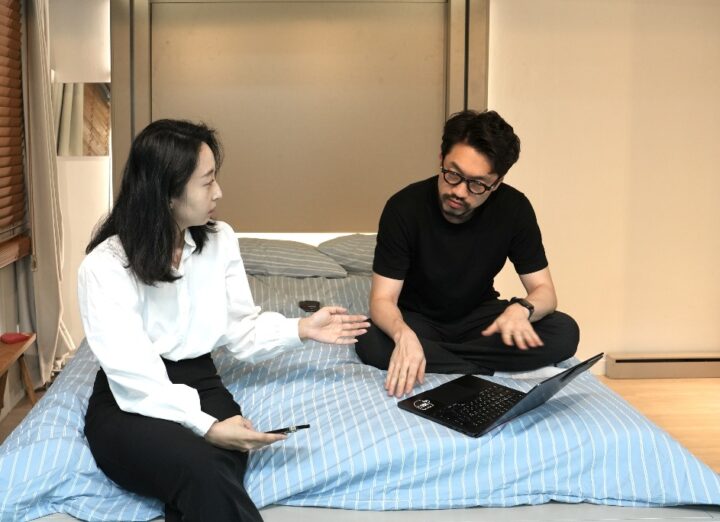
“When I was in middle school, my dream was to be an architect who could move people’s hearts. I became an entrepreneur, not an architect, but my goal is the same. I want to give more people the possibility of a freer and more prosperous life through technology.”
Robotom is currently applying for more than 10 patents both domestically and internationally. It remains to be seen how realistic their challenge of giving 12-pyeong freedom to those who were trapped in 4-pyeong studio apartments will become.
One thing is clear: the home is no longer a space that confines people, but rather a space that transforms itself for people.
You must be logged in to post a comment.