



-Providing customized legal services for each stage of startup growth, from founding to exit
– 49 professional lawyers with an understanding of startup technology and business
Startups grow while facing various legal issues from their founding to their exit. Effectively responding to legal issues is directly related to the survival of the company. In fact, it is easy to find cases where startups that were growing well close down overnight due to legal issues. It is especially important to prepare for legal issues in advance. However, most startups have difficulty preparing in advance because they do not have legal experts. They often fail to respond properly when issues arise. In this complex world of law, there is a specialized law firm that helps startups find the right direction. That is DLG Law Corporation (hereinafter referred to as DLG).
DLG, a law firm specializing in startups, took its first steps in 2017 at D.Camp. Currently, 49 startup experts (27 Korean lawyers, 11 foreign lawyers, 6 advisors, and 5 part-time lawyers) are providing solid legal support to startups.
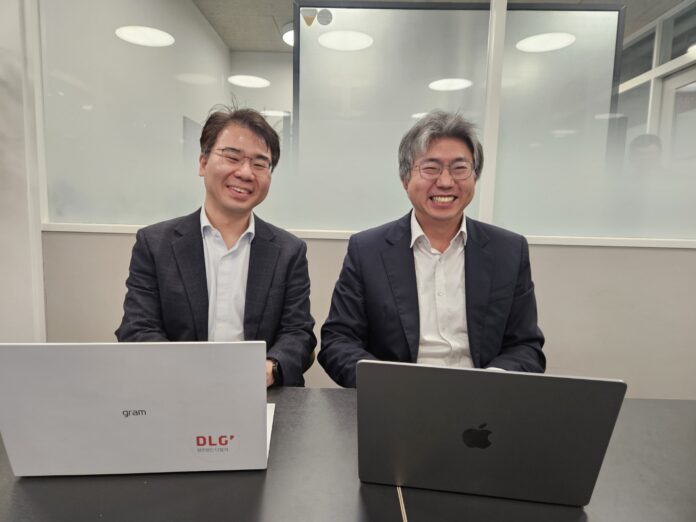
We met with Managing Partner Hee-chul Ahn and Partner Jae-seok Yang at the Gangnam Dream Plus office to discuss DLG’s startup legal support policy and legal issues that startups need to prepare for. Managing Partner Hee-chul Ahn majored in physics at POSTECH and graduated from Seoul National University Law School. He built up his work experience in various fields, including startup consulting, at Pacific and Kim & Chang, and joined DLG in 2018, becoming the industry’s youngest managing partner this year. Partner Jae-seok Yang majored in economics at Seoul National University and graduated from Law School. After that, he worked as a lawyer specializing in space and insurance at Pacific and is currently advising space/aviation/drones and fintech startups at DLG. Partner Jae-seok Yang also has experience founding startups related to e-learning and video platforms.
■ Providing professional, network, and startup-friendly services
When asked about the secret to DLG’s success as a startup-specialized law firm, CEO Attorney Ahn cited DLG’s expertise. DLG has been expanding its expertise by recruiting partner attorneys that startups need. The reason DLG has more lawyers with engineering backgrounds than other law firms and actively recruits them is because it reflects the characteristics of startups, which have many technology companies. CEO Attorney Ahn explained its expertise by saying, “DLG has a high level of understanding of the technology and business that startups possess. As technology advances and businesses diversify, we continue to recruit partner attorneys that fit this.”
DLG’s expertise can also be seen in the customized legal services it provides for startups at each stage of their growth. For startups that lack funds and legal knowledge, DLG is making them aware of potential legal issues and the importance of legal responses through lectures and mentoring rather than one-on-one consulting. For startups that have received angel and seed investments, DLG provides basic legal consulting, and for startups that have received series investments, DLG provides specialized legal services in all areas, including investment, M&A, personal information, IP, incorporation, and regulation (including sandbox). “Recently, a fair trade lawyer has also joined. DLG is recruiting the best specialized lawyers that fit the areas that startups need,” explained CEO Ahn.
The close network with startup-related organizations is considered to be DLG's strength. If a startup encounters a legal issue, it is often difficult to turn back. DLG participates as a mentoring partner in startup-supporting government agencies, related associations, accelerators, etc., and through its network with these organizations, DLG proactively responds to legal issues before they arise or before they expand to startups.
Another strength of DLG is that it provides startup-friendly services. “Other law firms usually provide one-point advice on specific legal issues when startups contact us,” said Attorney Ahn. “However, as we build relationships with startups, we not only consult on the startup’s overall management strategy, but also collaborate in various fields.” Beyond simple legal advice, we are acting as a collaborator and facilitator as a member of the startup ecosystem.
We talked about the legal issues that startups need to be aware of, especially how startups should respond to investment contracts and intellectual property rights.
■ “Investment contracts, you need to understand the characteristics of each growth stage”, “Overseas investment, we and Silicon Valley are different”
Attorney Ahn Dae-pyo emphasized the following points to keep in mind regarding investment contracts.
First, you need to understand the investment characteristics by growth stage. The investment scale and investors are different by growth stage. Seed investment is mainly invested by angels or early accelerators, and series investment is invested by professional investment companies, large VCs, global investment companies, strategic investors, PEFs, etc. In the case of early investment, if you take risks and see future possibilities, you try to lower risks as you go to later investment and look at proven businesses. In this way, the investment purpose is different depending on the investor, and the contents of the investment contract are different accordingly, so you need to understand the characteristics of investment by stage.
Second, in the case of overseas investment, you must understand the local legal system and practices. Most startups use the association standard contract, but this alone is not enough, says Attorney Ahn. Attorney Ahn emphasized that it is necessary to have a precise understanding of Silicon Valley investment contracts. For example, overseas investment uses various investment structures such as SAFE and convertible notes, and the priority and protection provisions for shareholders are stronger than those for domestic investment. There are also differences in terms and concepts due to differences in legal systems and practices. Therefore, it is essential to have an understanding of overseas investment contracts.
Third, when flipping, we must actively respond to issues that arise at that time. Korean investors may find it burdensome or object to it because the investment recovery path is complicated and there are problems such as restrictions on the investment association operation regulations. We must comprehensively review laws, finances, taxes, foreign exchange, and regulations.
Lastly, when exiting, you need to check issues such as the employment conditions of the founder, contracts with existing investors, intellectual property rights, labor, and taxes.
■ Trade secrets must be managed as confidential information.
One of the most important assets for startups is intellectual property rights. Partner attorney Yang Jae-seok said that there have been many copycat disputes between companies recently, and he recommended the following strategies to prevent them.
First, trade secrets must be managed as secrets. Intellectual property rights (patents, trademarks, copyrights, utility models, designs) and trade secrets have different protection methods. Intellectual property rights are protected through public disclosure and registration, but trade secrets are protected by keeping them private.
“Many startups are unable to register in the early stages due to a lack of funds or knowledge required for registration. That’s why managing it as a trade secret is the top priority.”
Second, you need to set a strategy. You need to make a strategic decision on whether to disclose intangible assets and manage them as registered patents or continue to manage them as trade secrets. The two partners recommended that startups manage them as trade secrets in the beginning and then decide on a strategy later.
■ Regulatory risks must be reviewed in advance
“Regulatory risks need to be reviewed in advance. If you are contacted by a regulator after development is complete and the service is launched, it is already too late.”
Startups with new business models often face regulatory barriers. How can we respond to this?
The two partners emphasized that the most important thing is to identify regulations. They said that they need to know what regulations are in place for their business so that they can decide whether to change their business model, bypass regulations, or diversify their business.
Regulatory response can be approached in three stages.
- Change your business model – Modify your business model to avoid regulation.
- Regulatory Sandbox – Attempting to ease regulations through official channels
- Crown – Efforts to deregulate through informal channels
“Some issues can be resolved through sandboxes, while others can only be resolved through loans. If loans don’t resolve the issue, the only options are to wait or go overseas.”
■ Labor issues must be taken care of from the beginning of a business
In addition to investment and regulation, both partners cited labor issues as an important legal issue for startups. Labor issues are important issues that startups inevitably face during the growth process. If you don’t pay attention to labor management from the beginning of your business, it can develop into a major crisis later on.
“If a startup gets involved in a labor dispute, it loses a lot of time and money. It is more economical in the long run to establish an HR system from the beginning.”
To do this, a clear employment contract must be drawn up from the beginning. The employment contract must clearly state employment conditions such as wages, working hours, job descriptions, and benefits. This will be of great help in preventing disputes that may arise later. In addition, if there are more than 10 employees, employment rules must be drawn up and reported to the relevant labor office. Employment rules contain the company's basic employment conditions and service regulations such as working hours, wages, vacations, and disciplinary actions. If the relationship with a problematic employee is not resolved quickly, it can have a negative impact on the company culture and performance. It was also emphasized that the legal requirements must be met during the process.
■ Simultaneously targeting domestic and international markets with a two-track strategy
“This is the most difficult time for the ecosystem in the last 10 years. It is a complete cold spell. In times like this, we need to target not only domestic markets but also global markets.”
Attorney Ahn Dae-pyo emphasized the “two-track strategy” by saying, “It is better to have both a domestic corporation and an overseas corporation rather than choosing one. It is important to receive various domestic support projects through the domestic corporation and lay the foundation for overseas expansion. It is also good to have an overseas corporation and operate global services in earnest.”
■ AI and Personal Information Issues
The AI industry is developing recently. What are the legal issues that arise in this new technology field?
AI services often replace human labor, which means that there are regulations that previously protected people. Therefore, it is important to identify regulations in advance and prepare countermeasures.
Attorney Ahn Dae-pyo said, “AI is a data issue. Personal information issues arise in the process of learning and utilizing data. Korea must consider not only the soon-to-be-implemented AI Basic Act, but also various laws such as the EU’s AI Act and California’s CPRA when expanding overseas.”
Finally, Attorney Ahn Dae-pyo said, “I believe that innovation will occur and our industry will develop only when startups grow. Just as accelerators operate placement programs, we also provide efficient support through programs for startups.”
In this way, DL Law Firm is positioning itself as a strong partner that helps the startup ecosystem grow based on its legal expertise. It provides customized legal services for each stage of startup growth, regulatory response, and global expansion strategies, contributing to the healthy development of the Korean startup ecosystem.
You must be logged in to post a comment.