



A lecture room in the Department of Playwriting at Baekseok Arts College in Bangbae-dong, Seoul. Writer Kim Hyeon-jeong (48), who just finished class, is leaning against the window and answering students' questions one last time.
He is a 'hidden master' of the broadcasting industry who has been writing for representative current affairs programs of our country such as 'Son Seok-hee's Focus (MBC)', 'Anchor Briefing (JTBC)', and 'News 9 (KBS)' for over 20 years. Although his face is not as well-known as that of announcers or anchors, most of the 950 'Anchor Briefing' episodes with anchor Son Seok-hee and the news manuscripts for anchor Lee So-jung were created by him.
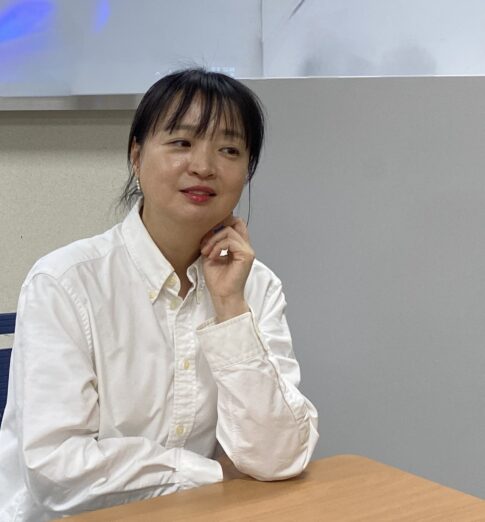
“Do you not know me? It’s okay. I know me. ‘Kim Hyun-jung’ is a common name. You probably know one or two Hyun-jungs around you,” he said, putting his laptop in his bag. “But the programs I’ve written are not ordinary. They’re ‘pretty’ resumes that you can show off without feeling ashamed.”
We met with him, who recently published 'Year-end Deadline, I Write Today (Hureum Publishing)', and heard about the survival wisdom he would like to pass on to startup founders based on his experience of writing while being chased by deadlines every day for 23 years.
“Startup people, I respect you… Don’t you just have a different heart?”
Writer Kim Hyun-jung surprised us with an unexpected statement from the beginning of the interview. “I feel respect for entrepreneurs. I am someone who regularly receives royalties from broadcasting companies, but startups are ‘businesses’ that rely on uncertain possibilities. Sometimes, they live with the fear of not earning a single penny… I often think, ‘Isn’t their heart different?’”
Still, he says, there are commonalities between writers and startup founders: Every day is a challenge, and both have to perform in the face of uncertainty.
“The most important thing is to do everything you can in a given situation, and even if the results aren’t as good as you thought, forget about them and shake them off. Since you did your best, accept the results as they are. If you get overly excited or depressed by the results, your self-esteem will continue to drop.”
He continued, “Even if I didn’t do well today, I did my best, so that’s okay. I think the mindset that I can run a little more tomorrow is the basic attitude that will allow me to run for a long time and endure. It’s the same with writing and startups.”
Collaboration with anchors Son Seok-hee and Lee So-jung… “It was important to read the anchor’s mind”
I asked writer Kim Hyun-jung about the most difficult part of her life as a broadcast writer. She laughed without hesitation, saying, “The anchors, their very existence was difficult.” “Anchor Son Seok-hee and anchor Lee So-jung. They were both people who did not know ‘satisfaction.’ They had reached a decent position and it seemed like they could go slowly, but they had a strong desire to make even better programs.”
He cited reading the other person's mind as the secret to working with a difficult partner. "No matter how brilliant my manuscript is, if the anchor can't properly digest it, it's useless. I carefully observed their facial expressions when they read the manuscript, whether they frown or raise their eyebrows, and tried to read their minds."
How about applying this to startups? “Isn’t it the same for startups? Even if you have a brilliant idea, it’s useless if you can’t find investors. Rather than creating your own idea in advance and then looking for investors, you need to create a specific image of the investor you want to find, and work on adjusting your idea to the values and direction he wants to invest in.”
“If you crouch, no one will read”… How to make your worth known
Author Kim Hyun-jung said in her book, "If you crouch, no one will read you." I asked about the communication strategies of startups to actively promote their value and gain attention.
“Even if you hold a sparkling jewel, if you stay still, no one will notice. You need to try to step out into the world, even if it’s just one step.” He gave an unexpected example. “The field of writing is one that is easily mistaken for an introverted and passive profession. You think you just sit at your desk and write? If you do that, it’s hard to make a living.”
He gave examples of famous writers. “Writer Kim Young-ha, writer Jang Kang-myeong… They are actively engaged in broadcasting, giving lectures, and even hosting podcasts and radio shows. Writer Han Kang also had a time when she dressed up and appeared as a TV program host. She even sang songs she composed herself. Stephen King also started out by printing out his writings and handing them out to his friends.”
“Wouldn’t startups be even more so? They’re not companies that everyone recognizes just by hearing their name. It’s important to somehow make them known, and it’s important to try to show them to the world. Regardless of the means and methods. Of course, this is assuming that the attempt isn’t aggressive or in a bad direction.”
How to Read Trends… “Look around and poke your juniors”
As a broadcast writer, writer Kim Hyun-jung had to keep up with issues and trends every day. She cited “continuously looking around” as the secret to leading trends in a rapidly changing market.
“Anchors Son Seok-hee and Lee So-jung have always kept an eye on the trends of young people. They study the latest idol groups, popular programs, and trending things. Broadcasting has to move forward with the viewers and not age.”
He emphasized that it is important to have an attitude of learning from the younger generation. “At times like this, the easiest way is to reach out to young friends. Don’t ignore them because they are young or junior, but politely ask them about their world, and they will be happy to give you answers.”
He also shared a real-life example. “Even for me, when I was cast as a trendy guest like BTS or New Jeans, after I wrote the questionnaire, I would take the manuscript to the youngest members and ask them to review it. I would check and recheck to see if my thoughts were old or outdated.”
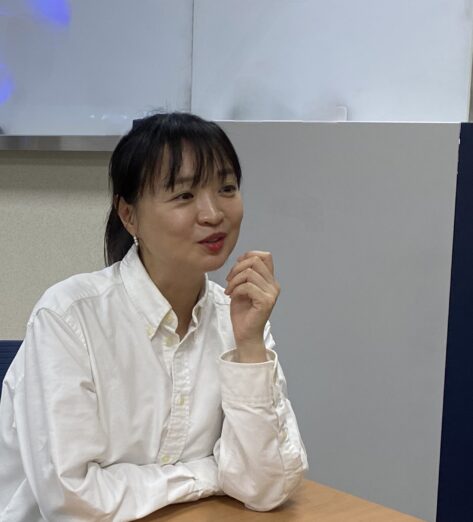
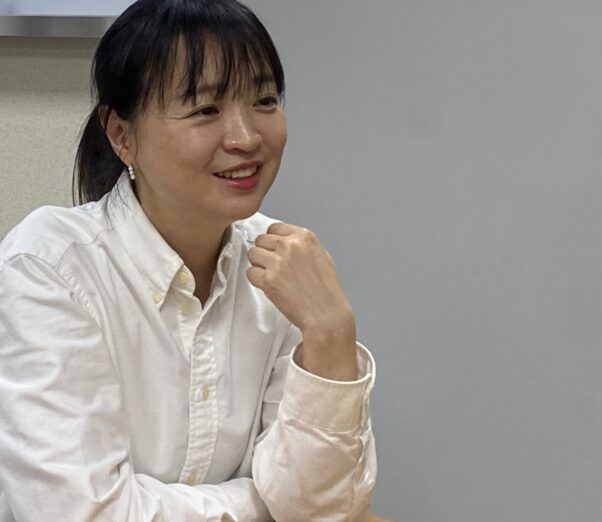
“Don’t make fun of other people’s world”… Maintaining objectivity in your own ideas
Author Kim Hyun-jung emphasized the saying, “Don’t look down on other people’s worlds.” She asked about the pitfalls that entrepreneurs can easily fall into when they are overly confident in their ideas and how to avoid them.
“Writers do something called ‘collaborative critique.’ It’s a process where they get their work evaluated by their peers. That process is honestly ‘very’ unpleasant.” She laughed. “When someone tells me what I worked hard to write, I tend to get aggravated first.”
But he emphasized the value of such feedback. “When I look back at those comments after a while, I feel resentful. It’s resentful, but there are many true stories. The flaws that are not noticed by the person writing quickly are seen by the person reading.”
He shared an anecdote about anchor Son Seok-hee. “It was the same when I wrote the anchor briefing. Sometimes I couldn’t accept anchor Son Seok-hee’s comments and corrections, so I would get angry, but when I looked at the writing again after a few days, or months, or years, I would realize that the comments were right. It was too late.”
He gave the same advice to startups. “I think it’s the same in other fields. Just listen. Even if you’re not an expert, if you keep your ears open, expose your ideas to as many people as possible, listen to their opinions, and think about them actively, you’ll be able to find a better way.”
The secret to maintaining passion without losing your original intention for a long time
I asked him the secret to maintaining his “passion for better results every day” while working for over 20 years. His answer was surprisingly honest.
“Of course, the number one thing is ‘money,’” she said with a smile. “It can’t be helped even if it seems vulgar. Everyone works to make a living. Especially as a freelancer, I have to prove my ability through my manuscripts. Not only when I was a junior writer, but even after I became a senior writer, I have to prove my skills every day that I am worthy of the manuscript fee I receive. You could say that the higher the manuscript fee, the greater the burden.”
He also emphasized expanding his capabilities. “The world is changing at a rapid pace. I started out with current affairs, but I became greedy for movie scenarios, and then expanded my ambitions to include advertising videos, planning, lectures, and even webtoons. I will gradually expand the territory of my writing in the future.”
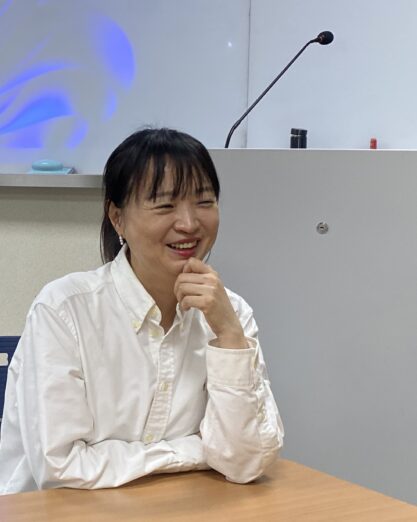
“Together we can run long”… How to build and maintain a good team
The importance of networks and collaboration is also emphasized in the startup ecosystem. We asked about the important factors in forming and maintaining a good team.
“Everyone thinks they are great inside. I was like that at first. I thought I was a very good writer, and I thought that if I could produce a good manuscript, that would be the end of it.”
He shared a moment of realization. “No. No matter how good the manuscript is, if the host ignores it, I become nothing. It’s the same if the screen isn’t good or the materials are poor. I thought I could do it alone, but there’s nothing I can do.”
He also emphasized the importance of gratitude. “I bow down unconditionally. I say, ‘Thank you, thank you, thank you’ a hundred times. Sometimes I say it without meaning it, but those soulless words of gratitude become sincere after a while. The other person is sincere. And if the other person works sincerely, the fruits of that work will eventually come back to me.”
He added that it is also important to admit mistakes. “If you have done something wrong, if there is something you need to apologize for, you should actively express it. Instead of just sending a text message or KakaoTalk, if you are in front of the other person, you should face them. If not, you should apologize over the phone. That way, you can loosen up each other’s hardened hearts and build trust.”
How to overcome a moment of crisis and get back up again
Finally, we asked about the mindset or specific methods that helped them overcome the moment of crisis and get back on their feet.
“I always resolve to shake off my hurt feelings each day. No one does something wrong because they want to make mistakes or fail. If you did your best but the result is like this, just admit it, shake it off quickly, and do better the next day.”
She said that her family’s support was a great help. “One day, when I was crying at home because my manuscript wasn’t going well… My teenage son said to me, ‘Mom, you’re the best writer I know. Even if you didn’t do well today, you can do better tomorrow.’ I think those words really brought me to my senses.”
He also shared his stress relief method. “When I’m having a hard time, I run. When I run, my thoughts become simpler. It’s just hard. When you endure the physical hardship, things like the things that hurt you today or the things you got hurt in relationships with people become nothing. When you’re having a hard time, I recommend doing some hard exercise. It makes you look back on your life, and it’s also a way for your body to become healthy.”
“Attention and listening are the most important”
At the end of the interview, I asked startup founders what communication skills they most need to develop to more effectively communicate their stories and visions to the public and investors.
“Interest and listening,” he said firmly. “Practice listening to other people’s stories. Isn’t the goal of a startup to capture other people’s hearts?”
He gave me a final piece of advice. “You think you know everything, but when you look back, you don’t even know your family’s life. You’ve never looked at the menu of the restaurant you often go to. Listen to other people’s stories as much as possible. And keep asking questions with interest. Through questions and listening, the universe of others is revealed, and your universe also expands. I hope you discover a lot of new possibilities in that vast universe.”
On the way out after the interview, author Kim Hyun-jung handed me her book, “Year-end deadline, writing today too.” Columnist Kwon Seok-cheon recommended this book, saying, “I’m jealous. It’s a book that contains the essence of a writer who has been training 24/7,” and it contained wisdom about life beyond writing. It was a time when startup founders gained a handful of wisdom to overcome uncertainty in his world, which anchors Son Seok-hee and Lee So-jung trusted and relied on.
You must be logged in to post a comment.