



It is still difficult for Korean SMEs to enter overseas markets. According to the Ministry of SMEs and Startups, the export volume of Korean SMEs in 2022 will reach an all-time high of $88.9 billion, but the export diversification rate has not changed much compared to 10 years ago. According to a survey by the Korea International Trade Association (KITA), the biggest obstacles for SMEs to enter overseas markets are securing local distribution networks (56%), laws and administrative procedures (34%), and lack of marketing and brand awareness (27%) , and these factors are the main factors that make it difficult for Korean companies to enter the global market.
Amidst these challenges faced by Korean SMEs in advancing overseas, startup SlogK is providing a breakthrough by proposing an innovative solution that lowers the barriers to entry into the European market for Korean consumer goods brands through an AI-based cross-border e-commerce intermediary platform .
Founded in June 2022, Slok aims to successfully establish Korean products in overseas markets. Its headquarters are located in Daegu, and it operates a branch office in Seoul and a subsidiary in the Champs-Élysées in Paris. It is also expanding its global network by establishing an office space in Station F in Paris.
B2C One-Stop Solution: Localization from Distribution to CS
Slok is pursuing a strategy of increasing brand awareness and expanding direct consumer contact points along with product exports. The existing B2B method is a structure that is advantageous to large corporations, and the reality is that there is a high barrier to entry for small and medium-sized brands. In contrast, Slok supports Korean brands to effectively establish themselves in the European market through B2C cross-border e-commerce intermediation.
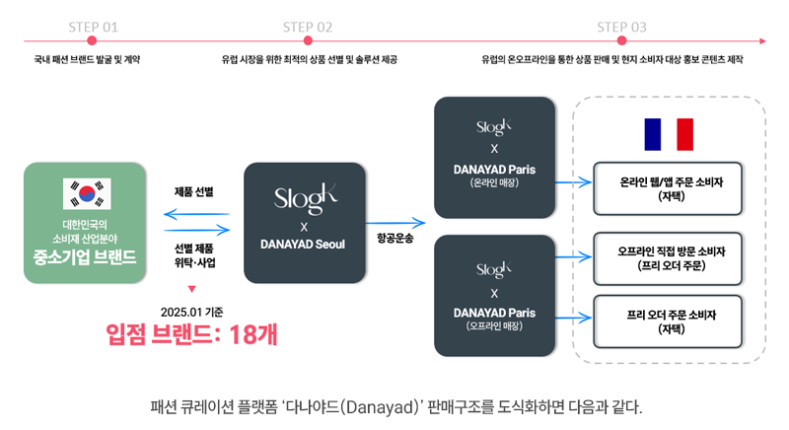
The Korean headquarters collects carefully selected products and conducts quality inspections, and the French subsidiary directly oversees distribution, marketing, payment, and customer service. It provides a fast delivery service within 3 days in France and operates a localized CS (customer service) that European consumers can trust, which is a differentiating factor. In particular, it also carries out a marketing strategy to increase brand awareness in Europe to maximize consumer experience. In addition to digital marketing using SNS and local influencers, it also provides opportunities for consumers to experience products directly through pop-up stores and offline showrooms.
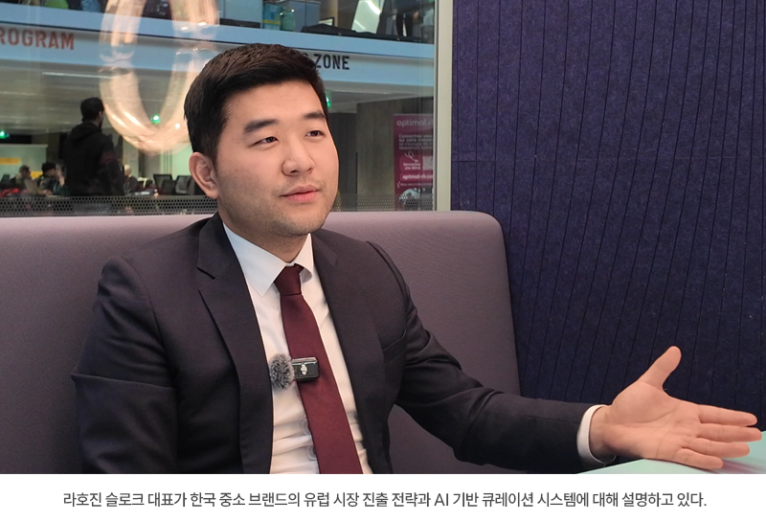
CEO Slok Rahojin pointed out that the existing B2B export method is structured around large corporations. He explained that small and medium-sized brands have difficulty securing local networks and branding.
He emphasized, “Building trust with local consumers, not just simple distribution, is key.” He continued, “We are strengthening the competitiveness of Korean fashion brands in the European market through AI-based curation and localization.”
In particular, he added that “AI technology that analyzes customer preferences and recommends the best products is a key factor in advancing into Europe.” He explained that this technology goes beyond sales and enables the establishment of a continuous relationship between the brand and local consumers.
A marketplace driven by AI-based personalized curation
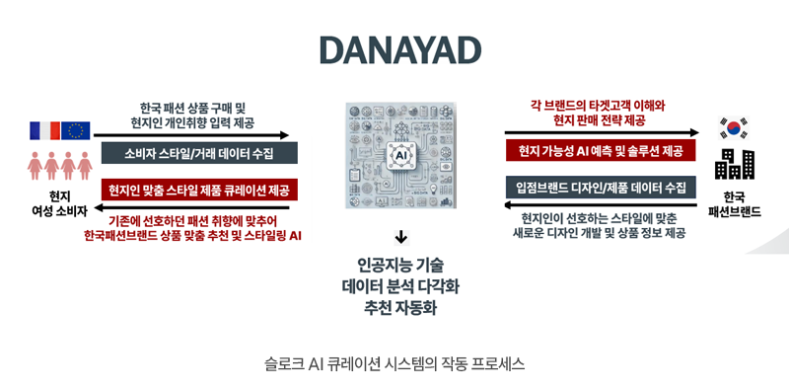
Slok developed a 16-style classification system based on MBTI personality types with AI-based customized curation. It collects purchase data (age, purchase history, click stream, SNS interests, etc.) of European consumers and categorizes them into categories that reflect individual lifestyles, such as ▲minimalist ▲vintage enthusiast ▲office look enthusiast ▲sporty casual. This data is fed into an AI algorithm to recommend customized products. In addition, the algorithm analyzes in real time the time consumers stay on the product page, the frequency of adding to cart, etc. to select the optimal target.
“AI acts as a store clerk”… The core of the European localization strategy
Slok's AI system not only recommends appropriate data, but also supports customized marketing that reflects local cultural codes . For example, consumers in the Provence region in southern France are given priority for eco-friendly linen clothing, while those living in downtown Paris are given priority for multifunctional items with minimalist designs. This is the result of AI learning about the differences in climate, culture, and trends by region.
SMEs Presenting European Entry Strategy with Customized AI Report
Slok has also expanded the system to a B2B solution . When a small business uploads product information (image, material, price), the AI compares it to competitive product data in the European market and provides an analysis report on ▲appropriate price range ▲target region ▲marketing keywords . For example, if you enter a linen shirt from a new Korean brand, the AI will suggest a strategy such as “targeting women aged 25-34 in the south of France, recommend emphasizing the keyword ‘sustainable fashion’” within 3 seconds. This has the effect of reducing the time and cost that small businesses spend on deeply analyzing local markets.
This two-way data collection and provision system provides consumers with personalized curation and supports brands with customized market entry strategies to secure competitiveness in the European market . AI algorithms analyze consumers’ real-time responses, allowing SMEs to receive immediate feedback, enabling rapid market response and brand optimization.
“AI not only provides data, but also precisely analyzes consumer needs like a local store clerk,” explained CEO Slok Rahojin. This technology allows SMEs to communicate directly with European consumers while exporting products. He pointed out, “In the past, SMEs had difficulty checking local market reactions due to B2B exports.” He continued, “We have built a system that receives immediate feedback from the B2C market through AI-based analysis.”
K-Fashion Goes to Europe: DANAYAD’s Successful Debut
Slok has launched 'DANAYAD', a fashion curation platform that supports the advancement of Korean fashion brands into Europe. This platform, which operates in an O2O (Offline to Online) manner, mainly targets women in their 20s and 30s. As the brand name, which means 'elegant water fairy', suggests, it is introducing K-fashion products that combine minimal design and functionality to the European market.
The first pop-up store was held in the Marais district of Paris from March to April 2024. At the event where 16 small and medium-sized Korean fashion brands were showcased, local consumers gave favorable reviews for the “minimal yet sophisticated design.” In a blind test, 80% of participants chose the Korean brand, acknowledging its quality and design.
Building on this success, a second pop-up store was opened from January to February 2025, this time introducing 18 brands to expand Danayad’s awareness.
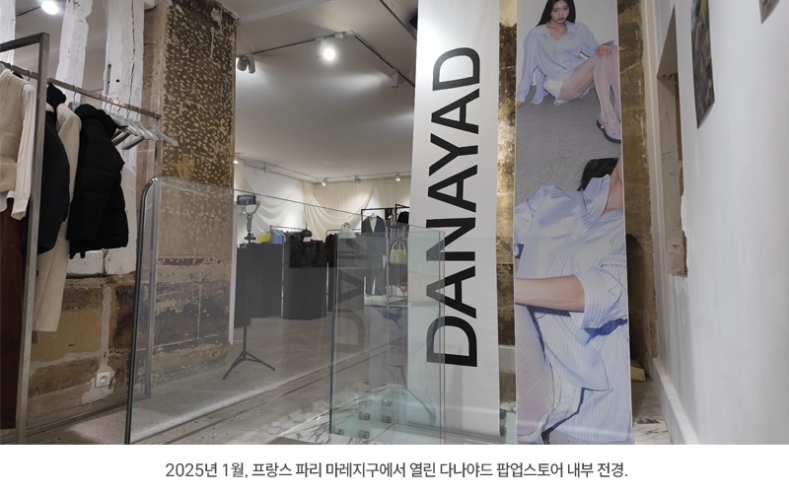
Eve Dumont (27, model), a famous French influencer who visited the Danayad pop-up store, said, “I was surprised by the luxury and originality of Korean fashion.” Isabelle Aboukowska (29, French journalist) commented, “Korean products are not a passing fad, but have a sustainable and sophisticated image.” Aude Chenantais (33, journalist) added, “I gained confidence after trying them on in person,” and “It is a strategy that reflects well the offline preferences of French consumers.”
The French fashion market is a key market with an annual size of 150 billion euros (approximately 220 trillion won), accounting for 30% of the global luxury market. In particular, according to a report by the French Fashion Association (Fédération de la Haute Couture), 62% of consumers aged 25 to 35 prefer ‘cost-effective designs.’ This shows that Slok has accurately grasped the market flow and established a strategy.
Government Support and Global Expansion Strategy
Slok has been strengthening its foundation for global expansion with startup support from the Korean government and various organizations. Starting with being selected for the K-STARTUP preliminary startup package of the Ministry of SMEs and Startups in 2022, it secured funds to support new market entry from the Small and Medium Business Administration in 2023 and was selected for the Korea Startup Center (KSC Paris) support program. In March 2024, it was finally selected and graduated with honors as the 14th class of the Youth Entrepreneurship Academy under the Startup Success Package, receiving additional support for business operation and technology development.
In France, the company has established a bridgehead for advancing into Europe by moving into Station F. It is conducting marketing and accounting consulting in cooperation with the HEC Paris (France's top business school) incubator, and is also expanding the recruitment of local talent by signing an MOU with ISMAC (Paris' fashion specialized training institute).
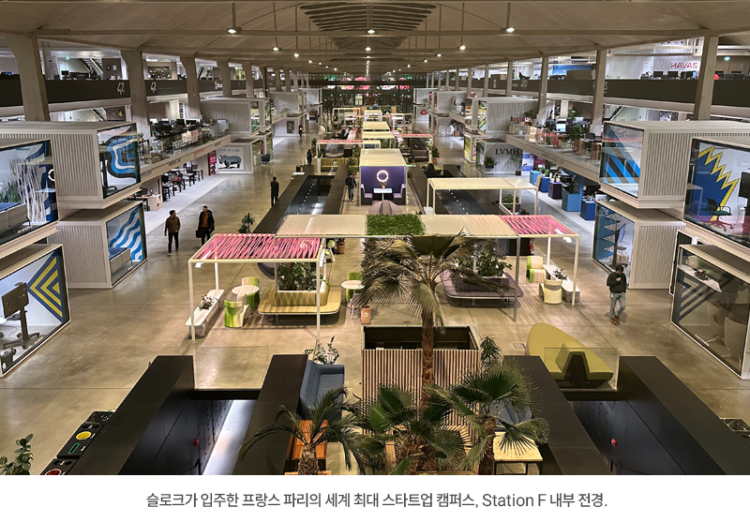
CEO Slok Rahojin emphasized that “government support in the early stages of overseas expansion was key to securing competitiveness.” He explained that the foundation for global expansion was established through the K-STARTUP pre-startup package and the KSC Paris program. In particular, with the support of the KSC Paris program, the period for opening a corporate account was shortened from six months to two months.
Recently, it attracted additional investment from investment funds of CNT Tech and Station K. The funds will be used to advance AI technology and expand the logistics network.
Cross-border e-commerce brokerage is a channel for cultural exchange
Slok’s cross-border e-commerce brokerage is more than just trading goods. It acts as a conduit for cultural exchange between Korea and Europe. By using AI technology to analyze European consumer data, it is increasing the precision of localization of K-brands and transforming from product exports to cultural exports.
CEO Rahojin said, “We are aiming to enter Belgium, the Netherlands, and Germany by 2025.” In addition to fashion, we plan to expand our business areas to food tech, cosmetics, and content, and grow into a comprehensive cultural platform.
The model, which started in France, is expanding across Europe and drawing a blueprint for global K-credibility for K-brands. Slok is evolving into a cultural business that goes beyond selling products in overseas markets and spreads the philosophy of Korean startups.
You must be logged in to post a comment.