



Special 3-step screening and strict post-treatment management
Open Innovation Optimization Strategy
Startups based on Korea's successful model target global markets including Vietnam
The Invention Lab started out as a consulting research firm called Roa Consulting, founded in 2004 by CEO Jinyoung Kim, who was from Softbank Korea. After consulting for telecommunications companies and semiconductor companies for 10 years, The Invention Lab was established to focus on platform companies as platform companies such as Airbnb and Uber emerged. It registered as an accelerator and startup planner with the Ministry of SMEs and Startups in 2017, and since 2019, it has introduced an open innovation model that cooperates with large and medium-sized companies to establish a structure to help startups survive and grow.
Currently, The Invention Lab is working with various companies such as Samsung Securities, KT, Kookbo Design, Woomi Construction, Borung Pharmaceutical, Hyundai Motor Group, and LG CNS to play a role in connecting startups and large corporations. In 2021, it was selected as a TIPS operator, and in 2023, it was selected as a Seoul-type TIPS operator, and it is developing into a house with strengths in both investment and nurturing.
■ The secret to a 93.4% startup survival rate… Investment is not the end.
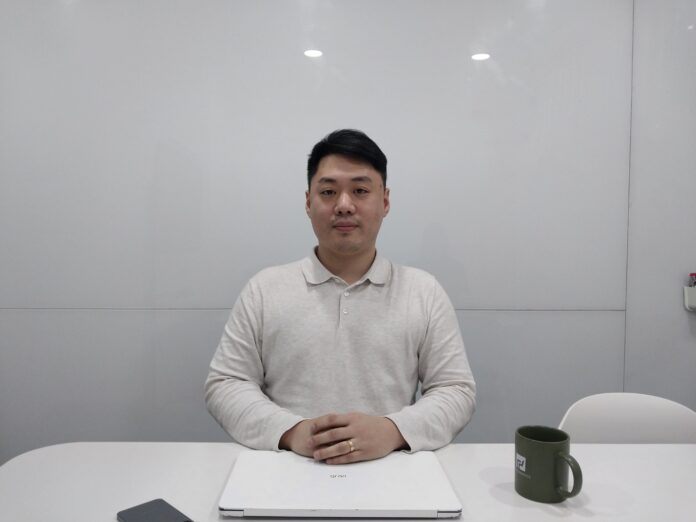
According to the Ministry of SMEs and Startups' 'Startup Survival Rate Status', the survival rate of domestic startups after 5 years is only 33.8%. However, the survival rate of startups invested by The Invention Lab is 93.4%. How is this achievement possible?
The startup investment market is changing rapidly. It is difficult to expect sustainable growth with just simple financial support, and a strategic approach that can produce actual results after investment is needed. In this changing environment, The Invention Lab is building a differentiated investment strategy through open innovation and global market expansion.
In addition to this large investment strategy, a special investment review process and strict post-management create a high survival rate. The startup investment review process of The Invention Lab consists of three stages: casual IR, professional review, and on-site inspection.
In the first stage, The Invention Lab conducts the first screening through casual IR, internal analysis of analysis reports, etc. In the second stage, LP attendance IR is conducted. About 10 experts gather to conduct IR. At this time, the evaluation of the company is divided into 'molecular units' and conducted. Not only technological differentiation, but also the company's growth potential, social value, etc., are reviewed from both micro and macro perspectives. In the third stage, 3-4 experts with expertise in the relevant field conduct an on-site inspection with The Invention Lab. They conduct interviews for about 3 hours, additional Q&A, and conduct another in-depth review. After that, they go through the investment decision process. Through this process, startups that can survive and grow are filtered out.
In the case of the Open Innovation Fund, the department in charge of practical work also participates in the evaluation and actively expresses opinions on the possibility of introduction and utilization. There is also a Samsung Executive Fund created mainly by Samsung Electronics Vice Presidents and above.
Aftercare is also strictly conducted. It is conducted mainly based on a real-time monitoring system based on monthly reports. Based on Notion, a project management and recording software, each BM receives a monthly management status from startups, and The Invention Lab and the responsible judges check it all. Issues are discovered during the verification process or startups make requests. If a company or VC wants to match, they are connected immediately. They also help attract investment and create collaboration cases. The key is to provide strategic support so that startups can continue to grow even after investment.
Since we are checking the actual business status every month, we can check the warning signs. If the status suddenly does not come, it becomes an emergency warning target. When the yellow and red warnings come on, we think about how to survive and enter into intensive survival mode. Even in places that are doing well, we continue to conduct general monitoring and prepare for crises. We contact frequently, and if there are collaboration points or areas that can be helpful, we contact and connect immediately.
■ Open Innovation Optimization Strategy… Joint Growth of Existing Companies and Startups
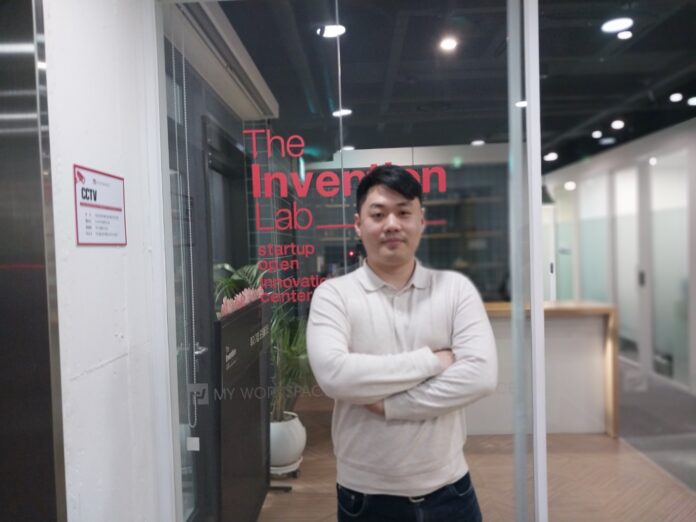
The core strategy of The Invention Lab is open innovation. It has built a structure that connects large corporations and startups to PoC (Proof of Concept, a process of verifying whether new technologies or services actually work and are effective), joint commercialization, and investment. Currently, The Invention Lab is collaborating with various companies such as Samsung Securities, KT, Kookbo Design, Woomi Construction, Boryeong Pharmaceutical, Hyundai Motor Group, and LG CNS, and is discovering startups suitable for each industry and providing practical collaboration opportunities with large corporations.
In Korea, most large companies are manufacturing companies. Manufacturing companies face various risks and opportunities, such as increased raw materials and labor costs. In order to make good use of these, a DT (Digital Transformation) organization or an open innovation organization is needed. Some companies, like Samsung or Hyundai, operate well internally. However, it is very difficult for mid-sized conglomerates to prepare for and respond to digital transformation internally. Change is especially difficult during transition periods or when they need to find the next food source. This is because they need to continue to do what they have been doing well, while also pursuing new things. To solve this, they need to find variables from outside. Startups have these human and technological resources. They can try joint business with external startups, and if it goes well, they can internalize new growth engines through M&A. From the perspective of startups, they need to create good references and conduct business, but there is no way to do this with less binding as much as open innovation.
The key is to help startups achieve greater growth through collaboration with large corporations, using their rapid execution capabilities and innovative technologies. This collaboration is evolving beyond simple investment relationships to support startups in achieving real results in the market.
The Invention Lab also creates and operates a scouting platform. We have gathered related organizations every time we conduct open innovation, starting with the popular research special zone development promotion foundation. We create connections through this database. In addition, through The Invention Lab’s special screening, we discover and propose startups that are just right. By finding places that have both collaboration appeal and investment appeal, The Invention Lab’s investment is successfully increasing.
What is important in PoC (proof of concept) varies from company to company. Some companies are only interested in creating collaboration cases, while others need to reflect the CSR (Corporate Social Responsibility) perspective well. Some consider improving efficiency in field application important, while others consider final business feasibility, profitability, and cost reduction important.
When investing in startups, the most important things to consider are business viability, technology, HR (Human Resources), overseas expansion potential, and scale-up potential. Business viability is how they make money with what BM (Business Model) and how they will make money. Technology is whether they have the originality for technology and whether they have the internal manpower to implement the technology. HR is whether they have the internal manpower to create business viability and technology. They look at whether there is scale-up potential through domestic and international cooperation. They also look at whether they have the ability to endure through recession and boom cycles and achieve success. Lastly, they look at the character of the core members.
When looking at companies that succeed in open innovation, whether or not they have a dedicated team makes a huge difference. Without a team, there are no KPIs (Key Performance Indicators). The Invention Lab sees the absence of KPIs as a lack of will on the part of management. Learn more about The Invention Lab Open Innovation
■ Korean-style ㅇㅇㅇ success model global localization strategy… Conquering Southeast Asian and Middle Eastern markets
When startups go global, they can draw a faster and steeper J-curve. The Invention Lab is helping startups advance into emerging markets such as Vietnam, Malaysia, Saudi Arabia, and the United Arab Emirates (UAE). It has the largest number of Vietnamese bases in Korea and has experience in investing in startup teams in the early stages of SEA (Southeast Asia).
In Vietnam, startups that are doing “Vietnamese ㅇㅇㅇ” business of successful Korean models such as Baedal Minjok, Today’s House, and Yanolja are being discovered and fostered. We have invested in startups that are commercializing business models that have already been successful in Korea with local Vietnamese people. GoToJoy (Vietnam’s No. 1 hotel room reservation service) and OKCe (Vietnam’s No. 1 used motorcycle trading platform) are currently ranked 1st and 2nd in their local Vietnamese verticals. In 3-5 years, brands specializing in consumer tech or F&B (food and beverage), health and beauty are expected to be good candidates for entry.
In Malaysia, investments are being made mainly by local conglomerates and government-led sovereign wealth funds. Malaysian conglomerates and mid-sized conglomerates are interested in open innovation and investment. However, domestic startup fostering is still insufficient, and even if fostered, it tends to go to Singapore, so Korean startups are very open to entering Malaysia for business and technology partnerships. Korean startups are active in AI, semiconductors, healthcare, and climate tech, so The Invention Lab is trying to bring these companies in to conduct PoC (proof of concept) and approach them to jointly commercialize or create joint ventures.
The Middle East is supporting the entry of high-tech startups in Saudi Arabia and the United Arab Emirates, and is currently in the process of attracting global investment by utilizing the Free Zone system, where the global standards of the United Arab Emirates have already been applied. Through this, in addition to overseas expansion, a customized cooperation model that takes into account the characteristics of each market is being developed. The Invention Lab is designing it so that follow-up investment can be received based on oil money.
■ The Invention Lab is an investment company and a startup… “Let’s go together”
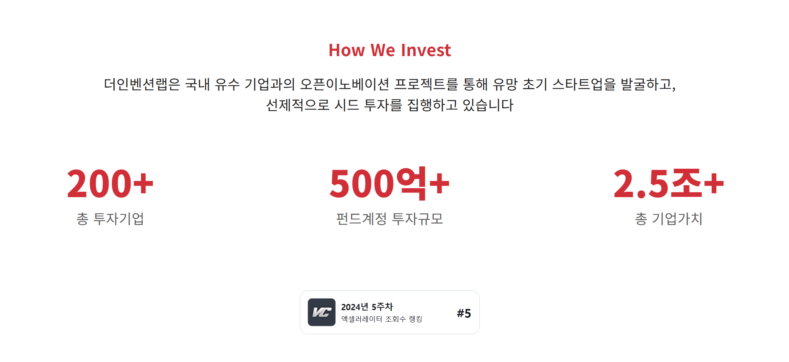
The Invention Lab invests in more than 40 startups every year, and as of 2025, it has surpassed 50 billion won in assets under management (AUM) and recorded more than 200 cumulative portfolios. In order to increase the survival rate of startups, it goes beyond simple financial support and conducts thorough pre-reviews and post-management, which has resulted in a survival rate of 93.4% for portfolio startups. View all The Invention Lab Alliances
In particular, The Invention Lab is building a support system for the continuous growth of startups. It provides collaboration with large corporations, global expansion consulting, and network expansion support even after investment, and selects about 20 startups for the TIPS program every year to help them receive government support.
In the future, The Invention Lab is also considering the possibility of expanding beyond seed investment institutions to venture capital (VC). In addition to early-stage startup investments, it plans to strengthen customized investments and support to help them grow to Series A and B stages.
“Let’s endure and grow! Even if times are tough, good times will come again.”
The Invention Lab is an accelerator and an organization that practices innovation like a startup. Director Kim said, “Just as the accelerator looked different 10 years ago, it will look completely different 10 years from now. If any large corporation or mid-sized group company needs help with internal innovation, please come to us at any time.” He added, “I would also like to work together to discover and nurture startups, explore and enter overseas markets. We always welcome talented individuals who can do a hundred things and go global together. It is a place where you will be given ample opportunity to take the lead and learn intensively. The Invention Lab is always open, and we always want to work with talented individuals, good startups, and good companies.”
You must be logged in to post a comment.