



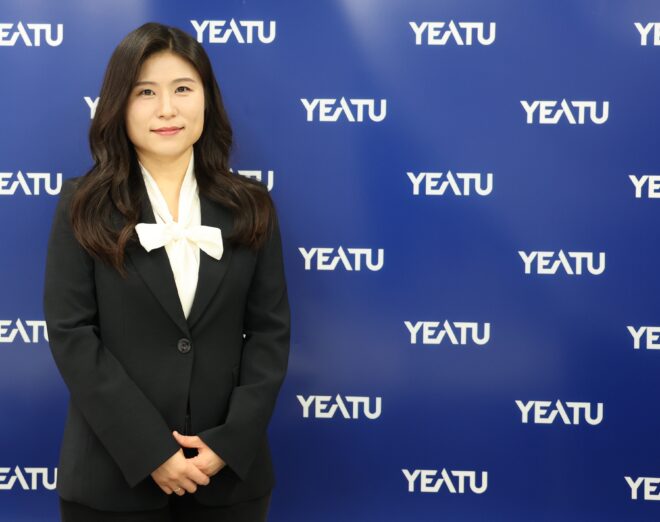
Youngrin Cho, CEO of Evertreis, challenges 'artist-only bank' based on AI credit rating
“Content should become an asset, and artists should become financial entities.”
The topic of Cho Young-rin, CEO of Evertreis (41), is clear. Based on his experience in the financial field for over 20 years, he is currently building a new ecosystem for artists who have been excluded from the financial system. His background as a foreign exchange dealer at one of China’s four major banks, an Asian director at an American financial company, and a strategy director at a domestic fintech company, 8%, as a lawyer, may have been preparation for this moment.
The vision presented by Evertreasure is to build an 'Internet Bank (EverBank) based on artist credit ratings'. Beyond a simple art tech platform, it aims to create a financial infrastructure that allows loans and investments based on artists' future earnings. We met with CEO Young-Rin Cho, who is making his grand dream a reality with 12 employees, and heard about his philosophy and strategy.
“Not a single one of my father’s friends…” The starting point of the problem awareness
“The business started from the question, ‘Why are artists always poor and excluded from financial services?’”
CEO Cho Young-rin's father worked at a broadcasting station his entire life, and there were many artists around him. However, most of them were not able to do their work properly, and he said that not a single friend of his had a job that was in line with his major.
“The future revenue (exhibitions, performances, IP licensing, etc.) generated by creators in various fields, including actors and musicians, through their works is an actual economic activity, but in the financial market, it is still treated as a consumer good.”
His diagnosis is that in this structure, it is difficult for artists to become independent, and it is also difficult for investors to find products worth investing in with quantitative indicators related to content investment.
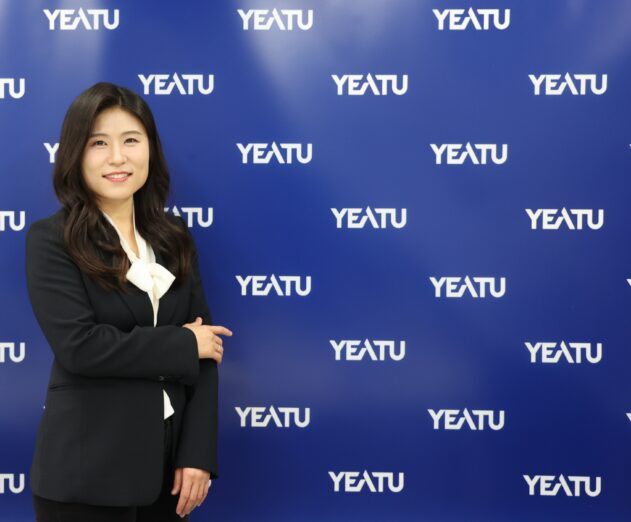
Can AI Read the 'Emotion' of Art?
Evertrejour's core technology is 'Emotion-based Art Value Analysis AI'. This system, which was selected for the government's TIPS this year and is currently under development, structures qualitative data such as SNS reactions, reviews, and impressions that were difficult to handle with existing evaluations using natural language processing and sentiment analysis technology.
“We designed the model to be able to learn and interpret high-level responses such as emotion or empathy, beyond positive/negative classification at the word level.”
How to reflect the elements of ‘subjectivity’ and ‘emotion’ when evaluating the value of a work of art is a key task in the art tech field. CEO Young-Rin Cho believes that although AI cannot fully understand the realm of appreciation, it is possible to predict market reactions through pattern analysis.
“This technological differentiation enables quantitative and qualitative integrated evaluation of complex art assets that were difficult with existing AI systems. It is a key foundation that can raise data-based art investment decisions to a feasible level.”
Another axis of Evertreasure is 'Everlink'. It is an end-to-end B2B solution that goes beyond simple networking to global networking → project matching → profit execution → settlement.
“Up until now, we have matched up with domestic and international artists through various projects such as the Hyundai Department Store Project, Seoul Hangang Art Festa, Everheart Concert, and Cross Connection with Japanese gallery partners.”
In fact, the 'Cross Connection' exhibition, which matches Japanese gallery partners with Korean artists, has created a win-win structure for both sides. Currently, over 100 domestic and foreign companies are subscribing to the platform and collaborating. Collaboration with existing financial institutions, such as linking BNK Gyeongnam Bank's virtual account, is also in progress.
Overseas expansion is not a choice but a necessity
The reason why Evertreasure prioritizes the global market is clear. It is due to the limitations of the domestic STO (Security Token Offering) system.
“In Korea, institutionally, I believe that the priority tasks are to legislate STOs, establish credit rating standards for art revenue, reorganize laws related to IP collateral recognition, and provide clear regulatory guidance for license issuers.”
However, CEO Cho Young-rin is already looking for answers overseas. Starting with the establishment of a UK corporation in 2025, he is currently in discussions with a UK token securities company and a POC (proof of concept). He is also discussing with Swiss banks and securities companies through overseas technology commercialization programs. In Japan, a project has been carried out through collaboration with a partner company, and he is also in contact with a Japanese securities company.
“In the long term, I believe that an STO-based content finance system can be formed naturally in overseas markets. The foundation for expansion into major European countries is already being laid.”
Heterogeneity as competitiveness, coexistence through collaboration
Evertreis’s big challenge is to combine the different languages of finance, law, and art. CEO Young-Rin Cho sees this not as an obstacle but as a “creative tension” and structural competitiveness.
“Artists think in terms of meaning and context, finance thinks in terms of numbers and risks, and law thinks in terms of articles and precedents.”
To address this, Evertreasure operates a bridge workforce that interprets and coordinates across domains, and has established a common glossary and documented protocols. It has maintained design consistency by involving art, law, and finance in the planning process between teams, and has created a horizontal organizational culture that is focused on meaning rather than results.
In relation to the existing art industry, it should be a ‘helper’ rather than a ‘destroyer’
“I believe that the unique role and expertise of existing planning agencies and galleries can never be replaced. We can be a partner that provides them with new financial tools and global liquidity.”
In fact, when a gallery plans a large-scale exhibition of an exclusive artist, it proposes a model of raising funds by conducting project funding through the Evertreasure platform or issuing profit securities for the artist's future works.
Evertreis’s revenue model evolves in stages. In the short term, transaction fees and platform revenue are the initial revenue structure. In the mid-term, we plan to introduce content-distributed investment products (funds, STO structures) and revenue models based on NFT/license/secondary creation revenue share.
In the long term, Everbank's core revenue streams will include AI credit rating-based loan and guarantee products specialized for artists and content, term deposits, and IP-based asset management fees.
“In order to lower the barrier to entry for the public, we needed to design for understanding, access, and trust,” explains CEO Young-Rin Cho.
“Yetu has secured financial security and trust by providing investment guidelines, an AI-based recommendation system, and linking with first-tier financial institutions such as BNK virtual accounts to popularize investment in the field of artistic content that everyone enjoys and is interested in, rather than stocks or coins.”
There is also criticism of the very concept of art tech. There is concern that the essence of art can be damaged when technology intervenes. CEO Cho Young-rin has a clear philosophy on this.
“I define Art Tech not as ‘technology for art’ but as ‘a new paradigm for enriching human life through art.’ Technology is just a tool, and it cannot damage the essence of art itself.”
He believes that “the criticism that ‘the essence of art is being destroyed’ that some people are concerned about occurs when technology focuses only on the ‘price’ and not the ‘soul’ of art.”
“We use technology to record an artist’s philosophy, struggles, and the narrative of how a work was created as data, and connect them with fans and investors from around the world who sympathize with this story. This is not about reducing art to cold numbers, but rather a process of proving and spreading the intangible value and emotion of art in a more systematic and persuasive way.”
When asked about the reason for Evertreasure's existence, he answered firmly.
“If our platform disappears, the gap between art and investment will remain unbridged. In a capitalist society, artists cannot continue to generate income, and the structure of Van Gogh’s time will repeat itself, where each time they create content, they become poorer.”
His belief is that when a single best-selling work can create assets worth hundreds of billions of dollars, the artist who created it should not be left out of that value.
Evertreis’ challenge goes beyond simple technological innovation. What they are attempting is to connect art and finance, emotion and reason, creation and investment, which have been separated until now, into a single ecosystem.
This unique combination of CEO Cho Young-rin’s 20-year career in finance, legal expertise, and love for art is probably an area that no one else would be able to attempt. Their approach is systematic and realistic, from global strategies to overcome domestic institutional limitations, to quantifying the value of art through AI technology, to expanding the ecosystem through coexistence with existing industries.
Of course, there are many issues that need to be resolved. STO-related regulations, securing objectivity in art valuation, and improving awareness among general investors are issues that are difficult to resolve in a short period of time. However, their journey, which began with the fundamental question of “Why are artists always poor?”, seems very likely to develop into a financial infrastructure that can change the lives of artists around the world.
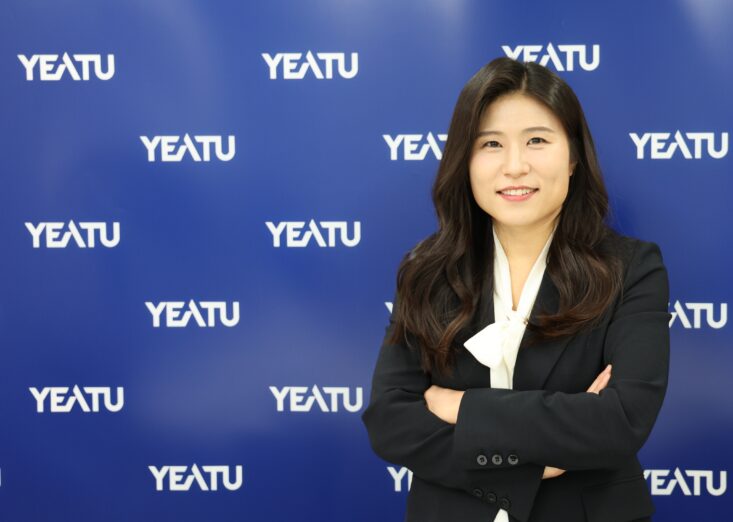
The future that Evertreasure dreams of. Will the world where content becomes an asset and artists become the main players in finance become a reality? The answer will probably be confirmed in a few years. What is clear is that CEO Young-Rin Cho and Evertreasure are pioneering a path that no one has ever taken before.
You must be logged in to post a comment.