



Wefunding, which has survived for 10 years without external investment, says, “Individuals also have the right to become building owners”
In the past, real estate investment was the exclusive domain of a select few. Only high net worth individuals or institutional investors with billions of won in financial resources had access to profitable commercial real estate. In a situation where ordinary people struggle to buy even one apartment, investing in office buildings or commercial buildings was a pie in the sky. Access to information was also limited, so individuals were inevitably excluded from the real estate investment market.
However, Wefunding shook up this structure. It introduced a crowdfunding platform that allows small amounts of money to invest in commercial real estate, thereby realizing the ‘democratization of investment.’ Now, even office workers can earn monthly income by participating in Gangnam office buildings or local commercial development projects with part of their salaries. Wefunding, which has built up the trust of individual investors with a 0% investment default rate for nine years, recently faced its biggest crisis since its founding due to the sharp decline in the real estate market, but is finding a breakthrough through responsible management, including the investment of the CEO’s personal assets.
Lee Ji-soo (43), CEO of Wefunding, whom we met recently at the headquarters of Wefunding in Teheran-ro, Gangnam-gu, is calm. His expression is so calm that it is hard to believe that the company is going through a major crisis.
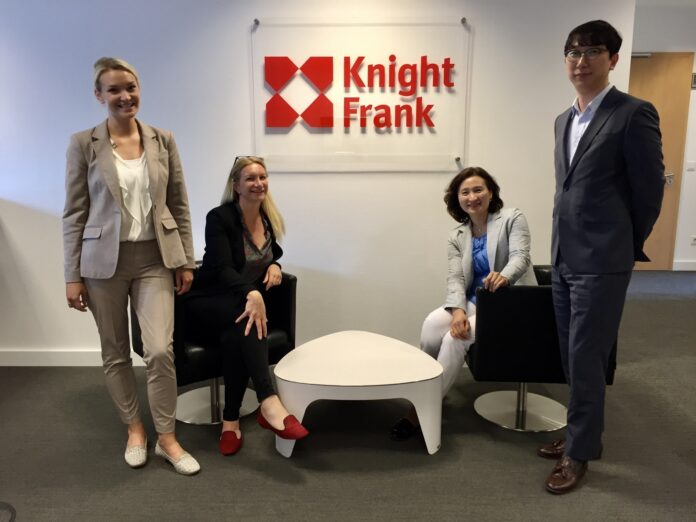
“It felt like starting over from the 20th floor underground,” he recalled when he started his business 10 years ago. It was the moment when he left his stable job at a British real estate consulting firm, where he was providing investment advice to large institutions such as the National Pension Service and global real estate funds, and jumped headfirst into the bare ground to start his own business.
I wanted to change the unfair real estate investment market.
When asked about the background of his founding, CEO Lee Ji-soo's voice became more powerful.
“While institutional investors easily make profits with the help of experts, the individuals who are the source of the money are excluded from good investment opportunities, which is an unfair thing to see.” He said that the money from insurance companies and pension funds is ultimately the money of individuals, and it is unfortunate that ordinary people cannot even access good real estate investment opportunities.
He started preparing in earnest by forming a team and participating in a startup demo day in 2014, and founded WeFunding in June 2015. At the time, fintech innovation was just beginning in the US and China. He recalled that he was convinced that applying financial technology to real estate investment, his specialty as a real estate appraiser, could lead to great changes.
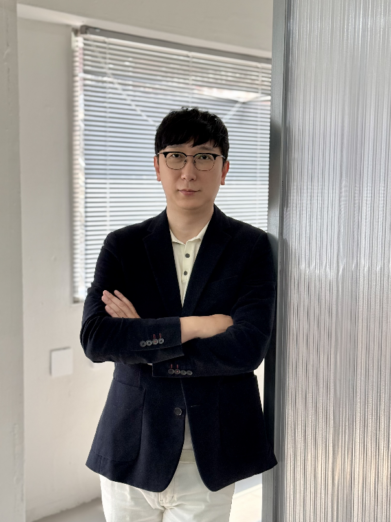
What is surprising is that WeFunding has survived for 10 years without attracting a single external investment. How was this possible when most startups are obsessed with attracting investment? CEO Lee Ji-soo confessed, “At first, we actively considered attracting investment.”
He had received a final acceptance notice from a famous accelerator in New York, but at the last minute, he changed his mind, saying, "Korean financial regulations are strict."
Through this experience, I decided that I should solidify my business structure on my own rather than rely on external capital. “I have steadily grown by reinvesting the money I earned back into the business,” he explained, “I chose substance and trust over immediate growth.”
The secret of a flawless record for 9 years
The great pride of WeFunding is that there has not been a single investment loss for 9 years from 2015 to 2023. This is despite handling various products from real estate PF (project financing) to housing mortgage loans and urban regeneration project investments. I was curious about the secret behind achieving 0% loss of principal while recording a cumulative investment amount of approximately 120 billion won and a realized return rate of 200%+ (annualized approximately 15%).
“First and foremost, thorough risk management and data analysis,” he emphasized. He used his experience as a real estate appraiser to refine his own review and deliberation model for seven years. He systematized the entire process from investment area market research to business analysis, borrower credit evaluation, and post-management. If there was even the slightest risk factor, he either did not handle it at all or imposed strict conditions.
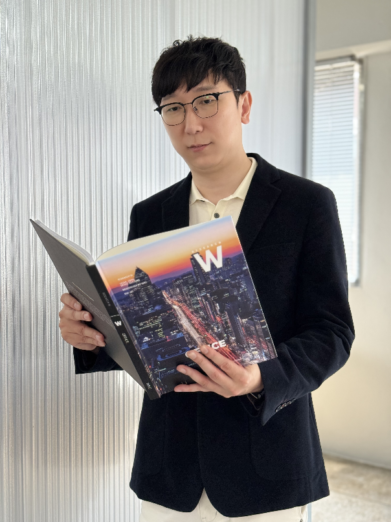
The research center located on one side of the office is also a unique differentiating factor for Wefunding. It analyzes domestic and international real estate market data to discover promising investment areas and products, and reflects the results in investment evaluation. In fact, it emphasized that the reports published by the research center are recognized enough to be viewed by external institutional investors for a fee.
Transparent information disclosure is also key to building trust. We generously disclosed research data before investing, and sometimes even shared on-site inspection photos and reports. We also periodically updated the investment progress to ensure that investors were not anxious.
“I will take responsibility even if it means investing my personal wealth.”
However, even WeFunding, which seemed perfect, recently faced a challenge. As the real estate market cooled rapidly in 2023, some PF loan projects experienced delinquencies. As interest rates soared and the jeonse fraud incident overlapped, the collateral value decreased, and borrowers were unable to complete their planned projects, causing problems with repayment.
In the first crisis since its establishment, CEO Lee Ji-soo’s choice was clear. “I decided to take responsibility for the investors first,” he said. “My heart sank, but I transparently disclosed all the circumstances to the investors.” Even when there was a delay, he disclosed management notes without hiding anything, and reported the progress of the auction or sale negotiations in real time.
What is most impressive is his financial responsibility. When the loss of principal became a reality in some projects, he decided to invest his personal assets. “I felt sorry for my wife and family, but it was my duty as a CEO,” he said calmly. “I am currently using the funds to recover as much bad debt as possible and continue to repay the investment.”
He also said that there were great lessons learned from this crisis. “We admit that we were not prepared for the worst-case scenario while focusing on growth,” he said. “We are completely reexamining our evaluation criteria and supplementing our risk management system.” He said that even in difficult times, because all information was transparently disclosed to investors, many people believed in us and supported us, saying, “Thank goodness it’s WeFunding.”
Dreaming of an era of 15 million building owners
Wefunding’s future vision is clear. It is to popularize real estate investment, which can be summarized as “creating 15 million building owners.” CEO Lee Ji-soo stated, “The economically active population in our country is about 28.5 million, but only about 2 million of them are building owners who own buildings or commercial spaces.” He expressed his ambition by saying, “Through crowdfunding, we will provide the experience of becoming a building owner to 15 million people.”
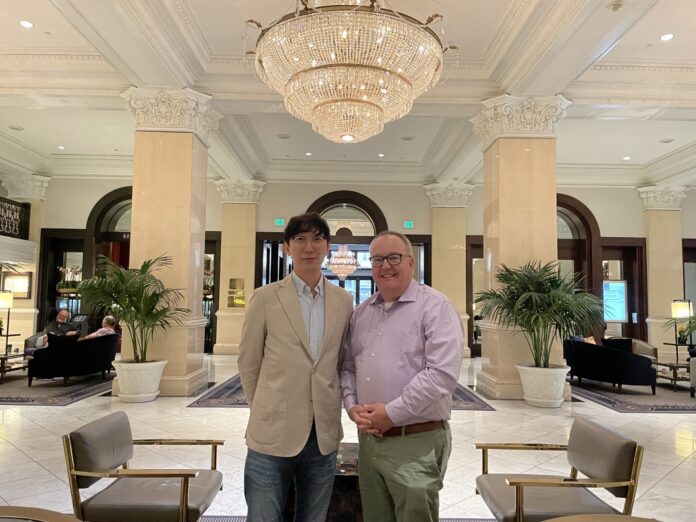
We are also preparing for global expansion. In 2021, we visited 11 cities in the U.S. and built a network with local real estate investment organizations, and signed an MOU with Silicon Valley-based real estate investment company 'Grow Scale'. We have also established a local U.S. corporation and have completed the warm-up for full-scale expansion.
Recently, they are also considering listing on KONEX. “I was greatly inspired by meeting the CEO of CREAL in Japan at the Korea-Japan Proptech Summit,” he said. “After seeing cases of growth through transparency through listing, I became convinced that listing is essential for us as well.” He said that after strengthening transparency through listing on KONEX, they plan to challenge listing on KOSDAQ.
He also mentioned the organizational culture. He said that the “nice and crazy” talent he emphasizes means a person with a good personality, good communication skills, but who is crazy about their work. He smiled and said that there is also a unique culture where they actively recommend employees to change jobs if there is a better opportunity.
CEO Lee Ji-soo emphasized, “What I have felt most after enduring for 10 years is the power of trust.” He added, “No matter how good the vision is, it would not have been possible without the trust of investors and customers.” He pledged, “WeFunding will remain an honest company that does not betray the trust of each and every investor.”
The 10-year journey of Wefunding provides implications for the Korean startup ecosystem. Above all, it is possible to build a sustainable business model without external investment. The way it responds to crises is also noteworthy. When a problem arises, it is not hidden or avoided, but transparently disclosed and the CEO takes direct responsibility, which is a model for startup managers.
The potential of the real estate investment market was revealed in his determination to “do my best until the day when all 15 million people become building owners.”
You must be logged in to post a comment.