



A day in the life of a therapist is surprisingly busy with things other than counseling. In a reality where administration takes precedence over professionalism, with handwritten appointment forms, payroll calculations, missing statements, and constant customer notifications, digital technology is unfamiliar and difficult.
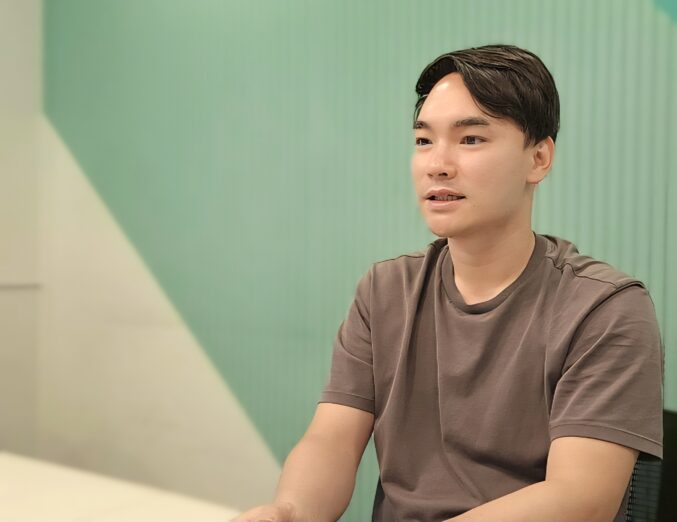
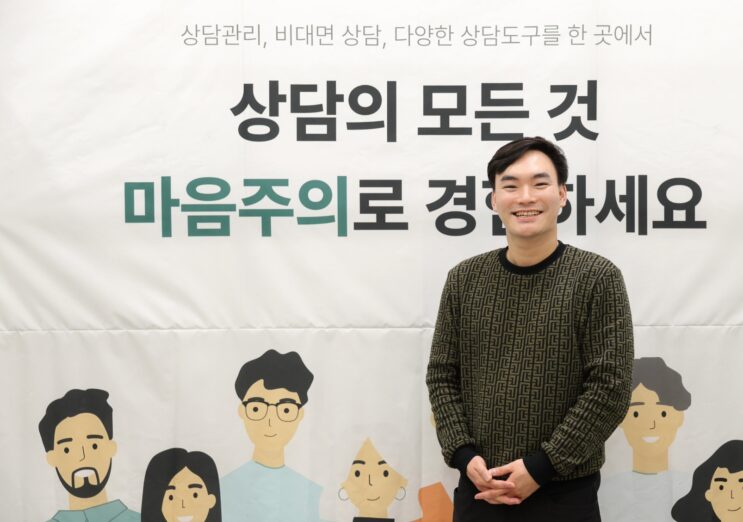
What changed this arduous repetition was a SaaS service that appeared silently. Its name was 'Mindfulness'. And behind it was CEO Lee Seong-won (40).
From investor to founder, that's how mindfulness began
CEO Lee Seong-won was originally someone who discovered and helped entrepreneurs. As a fund manager, he invested in promising startups such as Gopija, Pet Friends, and Pearl Abyss. And he observed the journey and trial and error of entrepreneurs on site.
“It was good to cheer and give advice, but at some point, the thought of ‘I want to try making something myself’ became stronger.”
Mindism, which started like that, has now been around for four years. It was not initially aimed at the ‘psychological counseling’ industry. CEO Lee Seong-won early on recognized “the difficulties of digital operation experienced by professionals who work alone” and designed the service in a way that solves the problems they frequently encounter.
“In the end, whether it’s a consultation or a lecture, the flow of ‘reservation-service provision-settlement’ is the same. I wanted to make this into a tool that anyone can use. Mindfulness should not be a complex platform, but a sword for the AI era.”

A team that implements faster than it explains and acts faster than it talks
The team of Mindism consists of about 10 people. They have settled in a shared office in Tehran-ro and have voluntarily reduced their remote work and chosen the ‘sense of working together.’
“As we talk about work, we start talking about life, and as we do that, the products start to change.”
Instead of a complex UX like CRM, Mindism aims for an interface that users do not have to search for buttons. It has optimized the usage structure, with the form 'Solo' for professionals who work alone and 'Hub' for centers or groups. In particular, the function that automatically issues a payslip when you register a schedule and even settles no-shows or cancellations is a key killer feature.
“Many customers say, ‘Once you use this, you can’t get out.’”
Initially targeted primarily at therapists, mindfulness is now used in a variety of professions: instructors, cleaners, travel agents, insurance salespeople, and even wedding shop owners. They all have one thing in common: they are all people who need to make reservations, meet with clients, and collect money.
Features are created together with customers
It surpassed 1,000 subscribers in just 5 months since its launch. CEO Lee Seong-won says, “We didn’t aim for a large influx from the beginning.” Rather, he explains that it was the result of building up small features one by one and reflecting customer feedback as quickly as possible.
“It would be more correct to say that this is not a feature we created ourselves, but a feature we created together with customers.”
The current two-month retention rate is in the high 70% range, and when there is a customer request, the team directly calls or manually organizes feedback. This is an approach that embodies the philosophy of being remembered as a ‘digital partner’ rather than a simple SaaS.
This sincerity is also revealed in the collaboration with the Korean Counseling Association. It is not a simple logo partnership, but rather, after discussions with the association's executives, we are continuing joint experiments for digital transformation.
“Counselor is a very professional person. Our job is to make it easy for them to use the technology.”
He sees 'trust' as the core of the product. Citing recent industry leaks of sensitive information, he asserts, "We will not repeat such a thing."
In addition to basic security features, Mindmind has introduced a financial-level security system, including data encryption and distributed storage, and prohibition of plaintext recording of sensitive information. Counseling records, psychological test results, etc. are designed to be unreadable even within the server.
“Customers may not know, but we should know. It’s a ‘promise that must be kept.’”
In addition, rather than leaving ethical issues to individual counselors, we have established internal log-based monitoring and a certain level of verification process. This is our intention to support the special nature of emotionally revealing jobs through technology.
Mindzum is joining the TIPS program and advancing AI-based functions. Video-based sentiment analysis, automatic no-show prevention, and reservation scheduling have already been introduced, and the direction to differentiate from domestic and foreign SaaS competitors is being refined.
Overseas expansion is also realistic. Through the project with Minerva University, we tested the professional markets in Southeast Asian countries such as Taiwan, Vietnam, and Singapore, and received an impressive response, especially from the young counselor community in Vietnam.
CEO Lee Seong-won does not introduce mindfulness as a simple SaaS. It is closer to a 'digital survival camp'. It is a small but not weak technology that helps you manage your work and life on your own.
“We’re not targeting big business. We want to be a tool for people who haven’t been helped by anyone.”
Even today, the team is fixing small bugs, reflecting customer feedback, and improving functions. Quietly but fiercely, with warm technology that supports one person's livelihood.
You must be logged in to post a comment.