



– Sharing strategies for entering and operating in the European market, especially the French market.
– Finding a solution for ‘cooperation, connection, and autonomy’, the success model of Station F
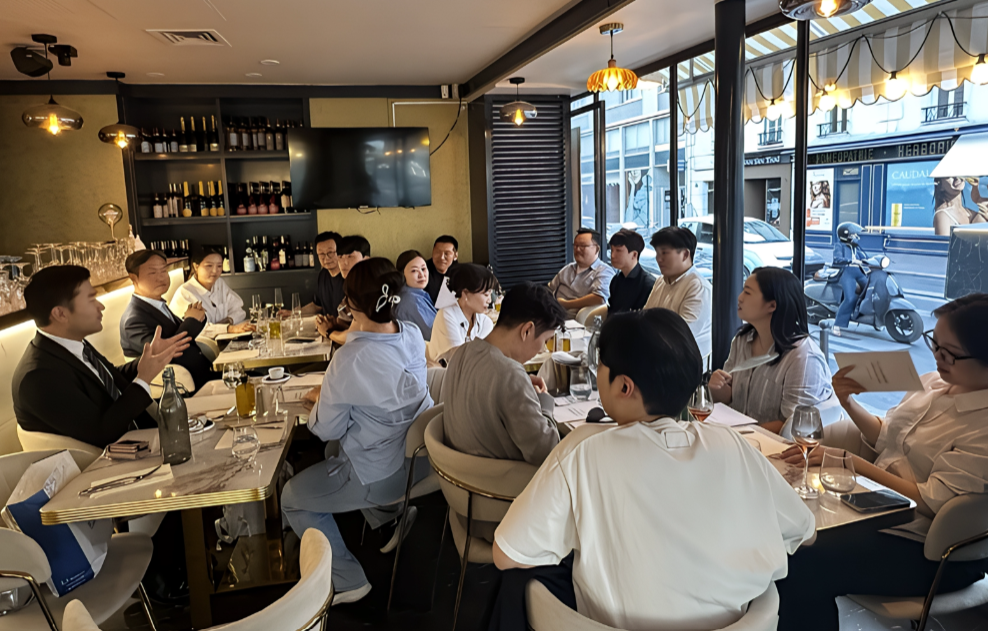
Last month, a meaningful event was held in Paris, France for the Korean startup ecosystem. Hosted by the Gyeonggi Center for Creative Economy and Innovation (CEO Won-Kyung Kim, hereinafter referred to as the Gyeonggi Innovation Center), a meeting was held to share experiences from ‘Viva Technology’ and the startup campus ‘Station F’ and to derive implementation strategies for Korean startups to enter the European market. The event brought together startups, overseas expansion support organizations, and senior entrepreneurs who have established roots in the European market.
A New Frontier in Europe – Exploring Opportunities and Complexities
Companies and organizations attending the meeting agreed that the French market has low barriers to entry, but pointed out that there are significant operational constraints, including legal, accounting, and language restrictions, after market entry.
“Startups can fall into the ‘valley of operational death,’ where they face great difficulties in expanding their actual business due to local laws, complex labor laws, and cumbersome bank account opening procedures,” said a local expert who attended the meeting. “It is important to actively utilize local accelerators or corporate collaboration programs, and in particular, the Partner Accelerator (AC) program within Station F can serve as a practical stepping stone to entry.”
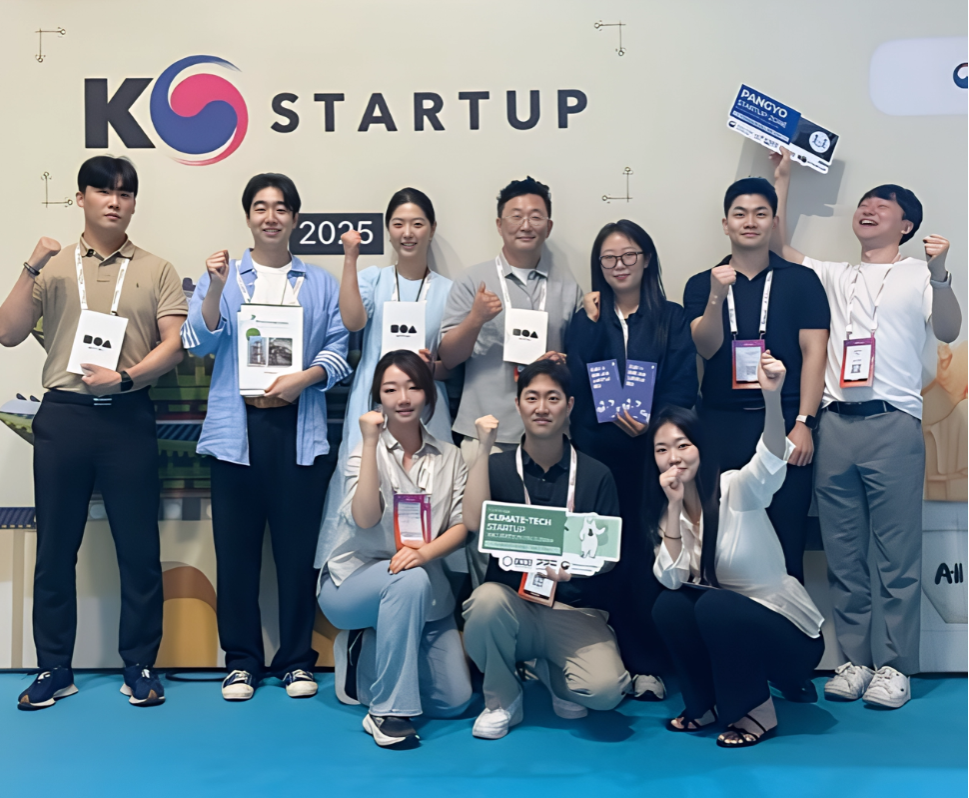
The experience at VivaTechnology was an important opportunity to confirm the potential of the European market. The participating startups all said, “We achieved results through practical meetings with local buyers and VCs, strengthened brand awareness, and discovered European partners.” In particular, the fact that “there was a lot of interest in climate tech, AI, and K-Beauty-related fields” is significant.
Another important outcome of the meeting was the presentation of practical solutions that went beyond theory. Hana Bank Paris Branch introduced practical support measures such as account opening, foreign exchange, and trade finance, and shared opinions on the need for sharing financial information and business linkages with European startups. In addition, SlogK and Woorikidsplus, which are already operating in Station F, shared their experiences in establishing local corporations in France, difficulties in cultural and personnel management and response measures, market entry methods for securing European customers, and how to utilize Station F.
Pioneers on the Field – Profiles of K-Startups Challenging Europe
The startups that participated in the meeting that day are like a microcosm of the present and future of Korean technological innovation. These are companies that have secured their own technological prowess in cutting-edge fields that are attracting attention in the European market, such as climate tech, AI, and bio.
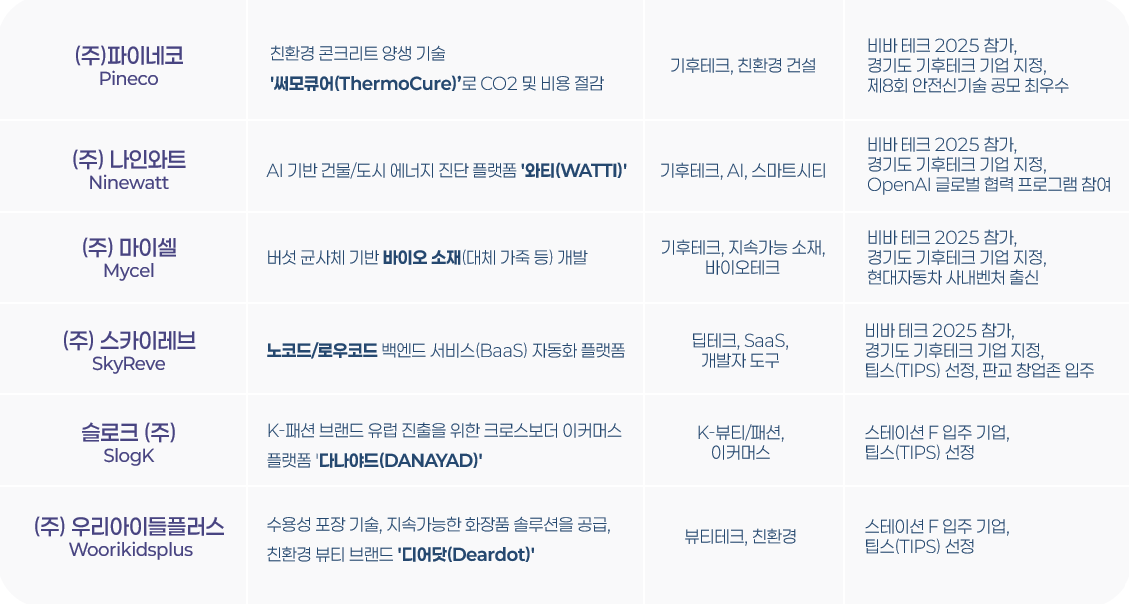
Mycel develops white bio-material leather using mushroom mycelium and presents a circular economy model. Ninewatt operates a platform that analyzes energy usage patterns in buildings and cities based on AI to find waste elements, and possesses core technologies that can contribute to achieving Europe’s carbon neutrality goals. Pineco increases sustainability in the construction industry with eco-friendly technology that reduces carbon emissions generated during the concrete curing process, and SkyReve is leading innovation in the developer ecosystem with no-code/low-code solutions that automate complex server development processes.
The Future Found in the Station F Model – ‘Collaboration, Connection, Autonomy’
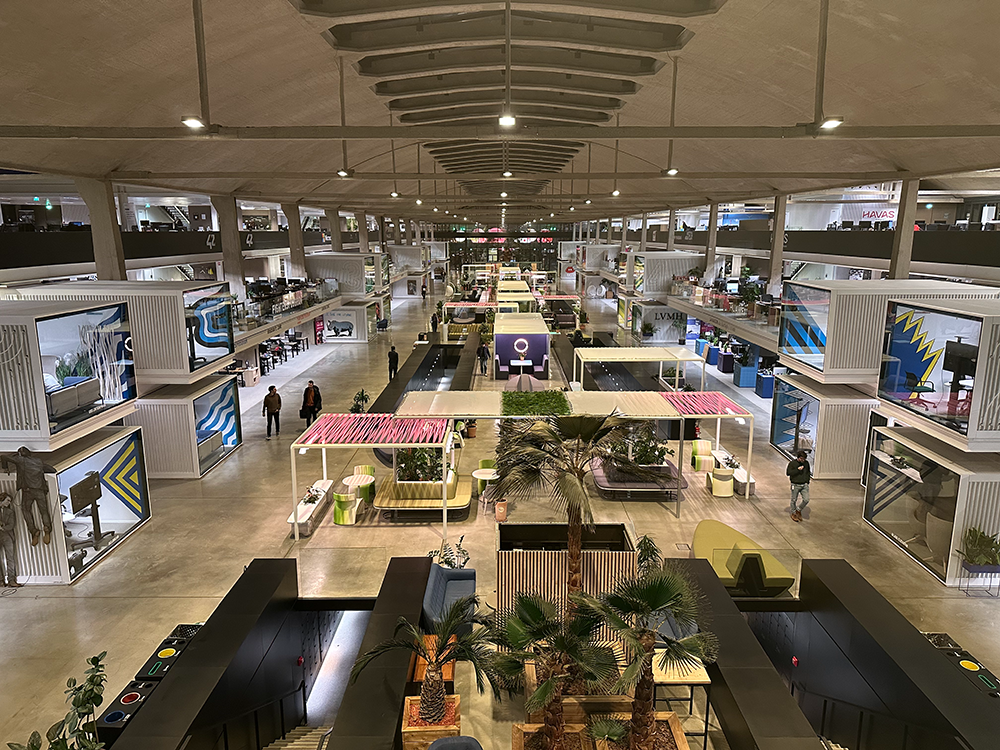
What inspired the Korean startup ecosystem the most during the meeting was definitely the way Station F operates. The attendees noted that Station F has a fundamentally different philosophy and structure from Korean startup support organizations. In particular, they were able to concretize the success factors of Station F and the growth strategy for Pangyo Startup Zone to leap forward as a global unicorn hub, focusing on the three core axes of ‘Cooperation,’ ‘Connection,’ and ‘Autonomy.’
[Cooperation] Direct participation and joint operation of various entities
Shin Jin-ah, the director of the Gyeonggi Innovation Center, said, “Station F has a structure where various partner organizations such as global corporations, educational institutions, and specialized ACs directly operate programs, and startups move in through these to secure both autonomy and expertise.” She also said, “Pangyo Startup Zone is also gradually expanding the plan to jointly plan and operate programs that connect from selection of resident companies to fostering in cooperation with global corporations, universities, and ACs,” and added, “We expect that this will further strengthen the current professional startup support system and elevate its status as a global startup hub.” She added, “Pangyo Startup Zone will continue to be able to organically support ACs, PoCs, and test beds that utilize the expertise and strengths of each organization, and will strengthen the foundation for discovering and fostering promising startups.”
[Connection] Real-time communication without boundaries between subjects
Another success factor for Station F is that it has established a system that allows real-time connection with investors and experts through a Slack-based community. This structure forms a network where startups can secure continuous feedback and investment opportunities without relying on one-time events or IR. Accordingly, Startup Zone is also expanding its constant connection base through the operation of a business support team, one-stop consulting, and in-depth networking programs to interact with various experts such as VCs and accelerators. In addition, it is expected that by introducing real-time communication means in the future and strengthening the community centered on voluntary matching and problem-solving, it will be possible to further refine customized support for startups at each stage of their growth.
[Autonomous] Community ecosystem led by startups
Station F actively encourages autonomous communities such as developer groups led by resident startups and female entrepreneur groups, and through these, builds a sustainable startup ecosystem where trust-based exchanges and information sharing occur voluntarily. In this way, the Startup Zone provides practical support in various aspects such as space and programs so that startups can proactively plan and operate networks, and serves as a foundation for creating an environment that promotes autonomy and participation. Station F plans to continuously expand the dynamic startup ecosystem centered on startups by further enhancing this support system.
Building ‘Team Korea’ – Execution Strategy for Global Success
The in-depth analysis and insights into the Station F model from the Paris conference suggest specific implementation strategies that the Korean startup ecosystem should pursue to become globally competitive. Now is the time to go beyond the struggles of individual companies and establish a systematic and organic support system to conquer the European market as ‘Team Korea.’
Korean startup support organizations need to evolve beyond direct support to become ‘corporate connectors’ that connect with the innovation needs of global companies. L’Oréal’s model of discovering and cooperating with promising startups through Station F’s ‘Beauty Tech Atelier’ provides us with important implications. Organizations such as the Gyeonggi Innovation Center should closely analyze and strategically match the technologies of startups in their portfolio with the open innovation programs of large European companies. Just as Viva Tech’s climate tech and AI startups have attracted great attention in the European market, a strategy of connecting pre-verified startups to meet the needs of specific companies can dramatically increase the probability of success.
Positive signs of this strategic alignment are already appearing. Through the network established at the VivaTech site, the director of the Beauty Tech Atelier of the global beauty company L’Oréal Group recently visited the Pangyo Startup Zone to meet with Korean startups in person and discuss cooperation in new technologies and climate tech.
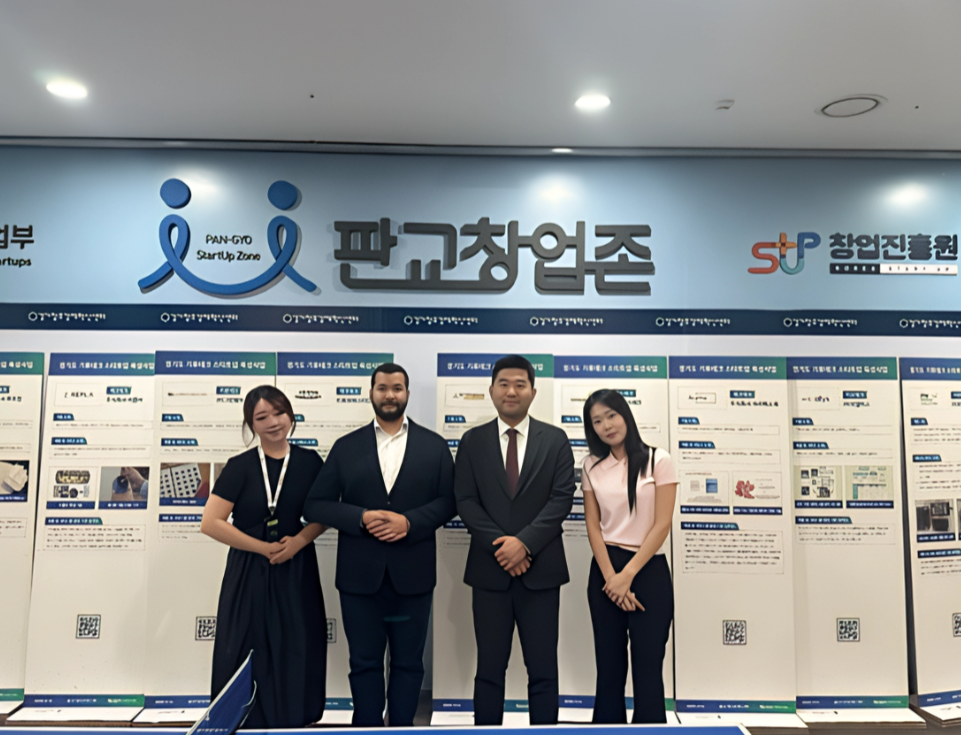
“It is very meaningful that the valuable connections made in France have led to practical business exchanges,” said Shin Jin-ah, Director of the Gyeonggi Innovation Center. “Starting with this visit, we will actively support promising domestic startups to participate in the open innovation programs of global companies such as L’Oréal and achieve tangible results.”
As L'Oréal focuses on securing sustainable bio-materials through its 'Green Sciences' policy, this meeting could serve as an important opportunity for Korean startups to be incorporated into the supply chain of a global conglomerate.
One of Station F’s most powerful weapons is a real-time communication network based on Slack. Korea should also build a dedicated digital communication platform that unites startups, local VCs, mentors, and support organizations that have entered Europe. This will act as a “digital bridge” that resolves information asymmetry and integrates fragmented support.
The initial barriers to entry into the European market are still high. As discussed in the meeting, legal, accounting, financial, and cultural differences are real obstacles that hold startups back. To solve this, we need to institutionalize a 'soft landing package'. This package provides financial services, professional advice from local law/accounting firms, and practical mentoring from senior companies.
Proving the 'value of connection', a bold voyage towards a global innovation hub
The meeting held in Paris raised important questions about the globalization strategy of Korean startups. The core diagnosis that the Gyeonggi Innovation Center obtained through its visit to VivaTech and Station F was the value of 'voluntary cooperation and practical connection.' Just as Station F serves as an 'open platform' that solves startup problems in real time with about 30 global partners, the Korean startup ecosystem is now moving toward that model.
An official from the Gyeonggi Innovation Center said, “We are planning to establish an integrated support system for the entire startup cycle by utilizing the strengths of the Pangyo Startup Zone (enterprise support hub) so that Pangyo 2 Valley can establish itself as a national ‘global innovation and startup hub,’” and “We will implement a growth ladder that links startup resources from each ministry to ensure the successful global expansion of startups.”
The visit of the L’Oréal director to the Startup Zone is a symbolic case showing that this strategy is not just a concept but is leading to concrete results. This is because the high interest in the climate tech sector confirmed by VivaTech in the European market has led to actual business cooperation discussions, clearly proving how Korea’s innovative technology can be an attractive partner for global companies leading ESG management.
The seeds of inspiration from Station F, namely ‘collaboration, connection, and autonomy’, have now been sown in the Startup Zone. Starting with the first fruit of the follow-up collaboration with L’Oréal, we look forward to the bold voyage of the ‘Korean innovation ecosystem’ that will enable more K-startups to be active on the global stage.
You must be logged in to post a comment.