



Rasemia Co., Ltd. (CEO Joo-gon Kim), a cutting-edge seed technology company responding to climate change, announced on the 24th that it had attracted a Series A bridge investment of 750 million won from the Korea Investment Accelerator. This investment was made based on the commercialization potential of Rasemia’s highly functional GM/GE seed technology and its potential to enter the global market.
Based on its platform ‘HiSeedX™’ that combines biotechnology, AI, and big data technologies, Rasemia is focusing on developing transgenic seeds that can adapt to drought and climate change. According to the company, crops that have applied the technology have shown up to 30% higher productivity than general seeds in drought environments due to their high water use efficiency, and can also reduce nitrogen fertilizer usage by up to 40%.
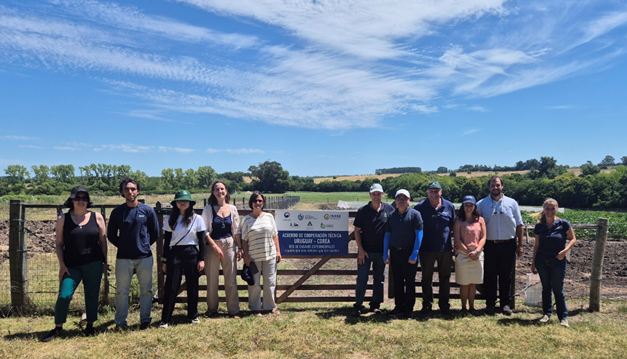
Racemia has secured a number of domestic and international patents for next-generation seed technologies applicable to various crops such as corn, soybeans, and rice, and is also conducting global joint research aimed at commercializing climate change response agricultural technologies. Starting in 2021, it has been operating test fields in cooperation with the National Institute of Agricultural Sciences and the Uruguayan National Research Institute, and is conducting local adaptation tests to establish a foundation for commercialization.
The company's key personnel include CEO Joo-gon Kim, who has led seed biotechnology research, Director Yong-hwan Kim, who came from global seed company Syngenta Korea, and Director Se-jun Oh, who is in charge of seed registration.
Nam Woo-hyun, team leader at Korea Investment Accelerator, which carried out this investment, evaluated the investment by saying, “As the demand for high-efficiency, low-input seeds increases due to changes in the agricultural environment caused by the climate crisis, Racemia has secured a level of technology that can be verified in an actual cultivation environment beyond laboratory technology.”
“We will present practical solutions for sustainable agriculture amid complex challenges such as climate change, food insecurity, and demands for carbon neutrality,” said Kim Joo-gon, CEO of Lasemia. “We plan to further strengthen our global commercialization foundation through this investment.”
You must be logged in to post a comment.