



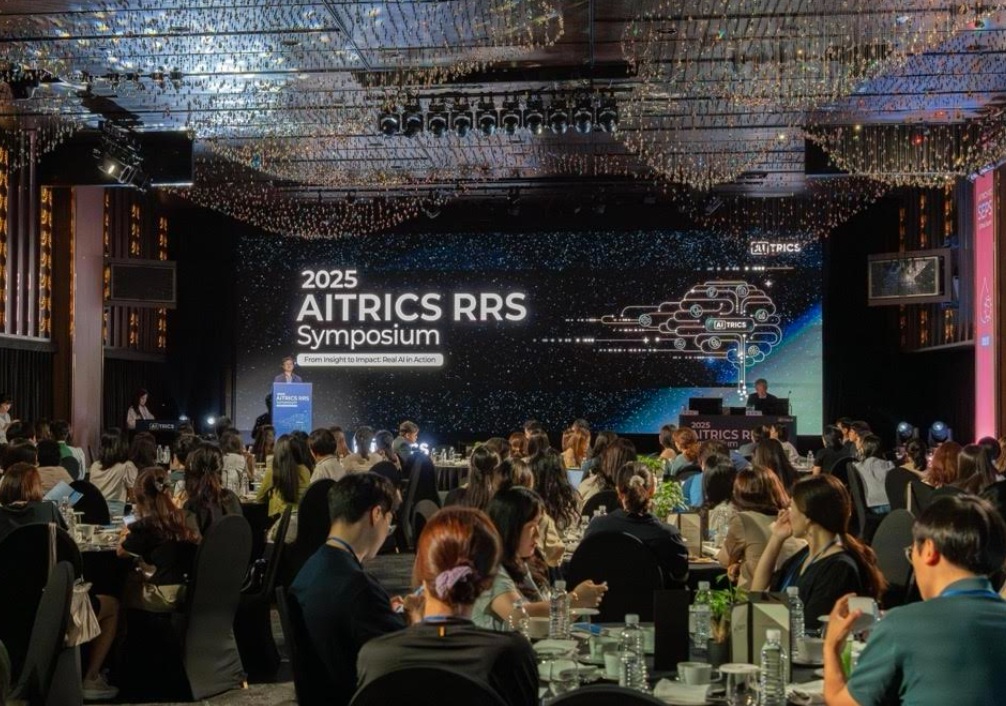
AITRICS (CEO Gwangjun Kim), a medical artificial intelligence (AI) company, announced on the 29th that it held the '2025 Rapid Response System (RRS) Symposium' at the Banyan Tree Club & Spa in Seoul on the 26th.
This symposium, held under the theme of 'From Insight to Impact: Real AI in Action,' was attended by approximately 140 medical staff from nationwide rapid response teams, who shared and discussed the current status and changes in RRT operation, as well as clinical application cases of 'AITRICS-VC (Vital Care),' an AI solution for predicting patient condition deterioration.
The symposium was chaired by Professor Seok-Chan Kim of Seoul St. Mary's Hospital, Catholic University of Korea, Professor Jae-Hwa Cho of Gangnam Severance Hospital, and Professor Yeon-Ju Lee of Bundang Seoul National University Hospital, and four medical staff from rapid response teams at major hospitals presented their field experiences and cases of utilizing AI solutions.
In the first session, Professor Jae-young Moon of Sejong Chungnam National University Hospital and nurses from the Rapid Response Teams at Seoul National University Hospital and Seoul National University Bundang Hospital presented examples of changes and operational practices in the rapid response system. Professor Moon stated, "The role of the rapid response team is expanding, and AI-based predictive solutions are greatly assisting medical staff in their decision-making." He also emphasized the importance of building trust and communication with the introduction of medical AI.
In the following presentation, nurses from the rapid response team shared details about the core role of RRT and operational changes following the introduction of the AI solution.
In the second session, Professor Park Ji-eun of the Department of Respiratory Medicine at Ajou University presented her clinical experience with Vital Care. Professor Park stated, "The combination of AI data and clinical experience has improved the efficiency and accuracy of critical care management. Positive outcomes, such as improved patient prognosis, have been confirmed, earning the trust of medical professionals."
Professor Seok-Chan Kim (Chairman of the Rapid Response System Research Group of the Korean Society of Critical Care Medicine) said, “This symposium was a meaningful opportunity to share how rapid response systems and AI technology are actually applied in medical settings,” and evaluated that “AI-based early prediction solutions will contribute to improving patient safety and strengthening early response capabilities.”
AITricks CEO Kim Gwang-jun said, “It was a meaningful time to directly communicate with medical staff across the country and confirm their clinical field experience,” and added, “Now that the clinical value of Vital Care has been proven, we will continue to strengthen our products and evidence to improve patient safety.”
- See more related articles
You must be logged in to post a comment.