



– Investment support from seed to IPO through the BDC Alliance
– Connecting to deep-financing through investment accelerators.
– Childcare service begins in August
BDC Accelerator is attracting attention in the domestic accelerator industry, achieving KRW 20.9 billion in Assets Under Management (AUM) in just three years since its establishment. It has particularly demonstrated remarkable success in raising public funds. In its first year, it received KRW 8.3 billion from the Ministry of Science and ICT's "Public Technology Commercialization Innovation Fund No. 1" (Mother Fund). In its second year, it successfully managed the KRW 5 billion "KDB NextOne-CNT Tech-BDC Startup Investment Association" as a joint General Partner. This is an unusually rapid buildup of public references for a start-up accelerator.
BDC Accelerator CEO Eun-kyung Heo began her career as a small-cap analyst at a securities firm. She then worked at an asset management firm, where she focused on investing in unlisted companies, and developed a deep connection with startups. She launched the BDC Alliance in 2018 with CEO Young-hwan Choi, a former private banker at a securities firm. In 2020, she officially adopted the BDC name and established a private investment association. In July 2022, she founded BDC Accelerator, where she now serves as CEO.
BDC Accelerator, founded by CEO Choi Young-hwan, serves as an inside director. The team, comprised of incubation, research, and operations staff, is dedicated to investment and incubation.
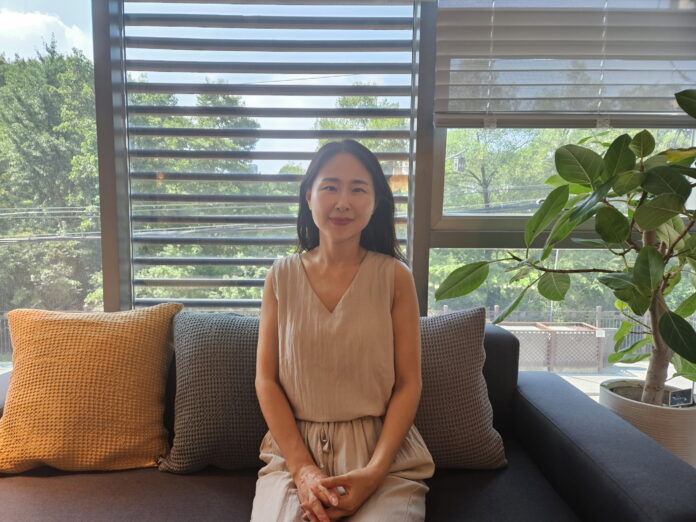
I met with CEO Heo Eun-kyung at the BDC Accelerator office, located on Bongeunsa-ro in Gangnam-gu, Seoul. This space is shared with BDC Labs and BDC Partners, two of the BDC Alliance's members. While they originally operated separate offices, they have come together to maximize synergy in investment review and portfolio support.

Building an investment ecosystem through research, early-stage, secondary, and growth-stage investments.
"Our alliance structure is what sets us apart from other ACs. Our well-established alliance network with affiliates allows us to jointly review investments and support follow-up investments and value-added improvements."
The BDC Alliance is a collaborative venture between three affiliates: BDC Accelerator, BDC Labs, and BDC Partners. Each plays a leading role in its respective field, while simultaneously forming a single, comprehensive investment ecosystem. BDC Accelerator is led by CEO Eun-kyung Heo, while BDC Labs and BDC Partners are led by CEO Young-hwan Choi. Choi is an inside director of BDC Accelerator and, as the largest shareholder of all three BDC Alliance organizations, oversees the entire alliance, creating a unique governance structure that enables integrated decision-making and strategic planning.
BDC Alliance (AUM: KRW 70 billion)
- BDC Labs: Research, Industry Analysis, and Investment
- BDC Accelerator: Early-stage startup investment and incubation
- BDC Partners: Secondary and Growth Investments
BDC Accelerator handles early-stage investments from seed, BDC Labs handles investments based on industry research, and BDC Partners handles secondary (reinvesting new capital in assets, structures, and situations already invested to reorganize the investment cycle and restructure the ownership structure, which is attracting attention as an alternative to revitalizing the venture capital market) and follow-up investments.
BDC Labs can be considered the "brain" of the BDC Alliance. It shares insights gained from industry research with affiliates and engages in joint investments. BDC Labs covers all emerging technologies, including ESG, mobility, artificial intelligence, the metaverse, robotics, bio, and quantum computing. In the metaverse field, it has even published a book, selling over 10,000 copies.
BDC Partners is a specialized investment firm that helps established companies reach the next level. To date, it has invested a total of 65.5 billion won in approximately 70 startups, including Senko, Krafton, Sigetronics, and Sapien Semiconductor. BDC Partners aims to establish a new technology finance company and plans to expand its investment scope from Series B to pre-IPO.
Continuous support from seed to IPO
Typically, startups must move through multiple investment firms as they grow. They might receive funding from an AC at the seed stage, then an early-stage VC at Series A, and then a growth-stage VC after Series B. At each stage, they must persuade new investors and adapt to their differing needs.
The biggest benefit of the BDC Alliance structure for startups is the uninterrupted, continuous support they receive throughout their growth stages. This is a significant advantage for startups. They save the time and energy of pitching their business to new investors, conducting due diligence, and negotiating terms. Instead, they can focus that time on product development and market expansion.
An investment in Sapien Semiconductor is a prime example. BDC Labs analyzed and discovered the emerging technology of AR/VR chipsets, and BDC Alliance quickly made an investment decision, achieving an IPO within a year and a half. The Swing made its first investment through BDC Private Investment Association in 2020, followed by five subsequent investments through BDC Alliance.
CEO Heo Eun-kyung emphasized, "It's a structure where we support each other. It provides a sense of stability, like receiving ongoing support from a family."
Connecting you to the deep-pocket financing you need to expand your business.
Expanding a business requires capital, but to secure it, you have to give up equity. This dilemma becomes even more acute for rapidly growing startups. Debt financing (a financing method where a company borrows money from financial institutions or investors with the condition of repaying the principal and interest over a set period of time) is a powerful tool to resolve this dilemma. Instead of giving up equity, the company uses its own assets as collateral for the loan.
BDC Alliance also supports defining financing, a type of financing difficult to provide by ACs or VCs. This is possible because BDC Alliance's founders come from securities firms.
"We helped The Swing secure a loan using tangible assets as collateral. This wouldn't have been possible without our network in the securities industry. We also connected them with legal experts and IT professionals specializing in UI/UX, helping them increase their value. This support enabled The Swing to grow rapidly and has now become the industry leader."
Investment in 30 companies… Value-enhancing growth, industry-leading growth, and TIPS program integration.
Currently, BDC Accelerator has invested in approximately 30 companies. Uniqconn is a semiconductor wireless connector technology developer. This is the interface technology that connects semiconductors, and signal transmission accuracy, power efficiency, and miniaturization are all critical technical elements. The importance of this connector technology is growing, particularly with the advancement of next-generation technologies like 5G, IoT, and autonomous driving. Uniqconn's initial valuation of 15 billion won has recently reached 80 billion won.
Hire Corporation, a startup founded by a dermatologist, began by building an online platform to address challenges in the medical device distribution market. It has since achieved rapid growth with the launch of its skin booster product. While medical startups are known for their stringent regulations and challenging market entry, Hire Corporation's rapid growth is attributed to its founder's medical background and the uniqueness of its products.
DoEat is a delivery platform with zero delivery fees. It improves delivery efficiency by bundling multiple orders from the same area and delivering them simultaneously, passing the benefits on to consumers in the form of free delivery fees. Implementing this business requires sophisticated logistics optimization technology. BDC Accelerator has invested in the company through its own account.
Qunova Computing (hereafter referred to as Qunova) is a quantum computing software company developing software and algorithms that can run on quantum computer hardware. BDC Labs discovered Qunova's technological prowess and market potential through research in next-generation technologies, including quantum computing, and subsequently invested in the company through a joint fund between BDC Accelerator and Venture Square. Venture Square also recommended Qunova for its TIPS program.
Investment through selection and concentration
The size of our investment also differentiates us from other accelerators. "We tend to be a bit more aggressive with our investments when we think it's worth it. We invest 800 million to 900 million won through our own accounts." This is a significant amount compared to the 100 million to 200 million won that typical accelerators invest.
So, what does BDC Accelerator consider most important in its investment review? CEO Heo's answer was clear.
"I consider the CEO the most important factor in investment evaluation. One of our first investments was an underdog, ranked below the top five in its industry. I witnessed the CEO's keen understanding of the business's essence and his passionate management. That's when I realized how crucial the CEO truly is. On the other hand, there have been cases where investments have failed. The CEO failed to properly fulfill his or her core responsibilities. A lack of management skills was the primary cause of the failure. These experiences have convinced me that, especially in the early stages of a startup, the CEO is almost everything."
Childcare program officially launched… Childcare center opens in Pangyo 2 on the 1st of next month.
"For the first two years of our founding, we focused on building a strong team to support the company's operations. Starting this year, we'll focus on childcare and further lay the foundation for our accelerator."
BDC Accelerator is also launching a childcare business this year. On August 1st, it will open a 128-pyeong (approximately 4,000 square feet) childcare space at its Pangyo 2 site in collaboration with Sogang University and HT Holdings. The "BDC X Startup Open Innovation Program 1st" will accommodate approximately 10 companies and seat 50 people.
"The government has strategically designated Pangyo 2 as a convergence cluster that integrates IT, BT, and NT. We want to use it as a strategic hub where startups can move in and connect with open innovation companies."
BDC Accelerator is also in charge of operating the '50 Startup Incubation and Support Program in the Northeastern Gyeonggi Region' hosted by the Gyeonggi Economic and Science Promotion Agency.

Early investments are risky, but building together with startups is a process.
Starting as a small-cap analyst at a securities firm, then investing in proprietary accounts at asset management companies, and now investing in early-stage startups. With 20 years of experience in the investment industry, why did CEO Heo choose the riskiest early-stage investment?
"We've gradually moved back to the earlier stages, and now we're at the very beginning. As a company reaches a certain level of growth, calculating returns becomes easier and visibility increases. For things like pre-IPOs and secondaries, we can already estimate expected returns. However, the earlier we go, the more volatile and risky it becomes, and the more difficult it is to predict. But it's also much more fun. There's a sense of collaboration, and meeting CEOs with truly fresh ideas and a strong sense of motivation energizes me."
BDC Accelerator's direction is also clear. CEO Heo emphasized, "We want to establish ourselves as a value-added accelerator, an investment-focused accelerator."
"Currently, there aren't many accelerators that can truly be called investment-focused. Most operate their businesses solely through childcare contracts. However, I believe the core of an accelerator lies in its structure: operating through investment and recovery. That's what we excel at, and it fits our style."
"The investment obligation ratio needs to be relaxed."
He also spoke candidly about the practical challenges of the accelerator industry. "The most difficult thing accelerators face is the mandatory investment ratio. We're required to invest 40-50% of our total investment in early-stage startups (those founded within three years), but this regulation is extremely stringent."
CEO Heo pointed out that these regulations don't align with reality. "Startups usually go through trial and error and pivot in the early stages. It often takes three years to reach a certain level of success. The hurdle is that we have to invest in these companies."
This is especially problematic, CEO Heo explains, considering the lengthening of the investment recovery period due to the venture capital industry's difficulties since 2021. "The investment horizon itself is lengthening, but being tied to a short three-year period is unrealistic."
CEO Heo emphasized the need for policy improvement, saying, "Increasing the period to around five years and easing the guidelines for early-stage investment companies, as well as the mandatory investment ratio, will revitalize the early-stage investment ecosystem." Indeed, easing the mandatory investment ratio is currently being discussed within the industry.
Will the "investment-based accelerator" model pursued by BDC Accelerator truly take root in the domestic ecosystem? It's difficult to judge based solely on the numbers: KRW 20.9 billion in AUM and over 30 portfolios in just three years since its establishment. However, the unique structure of the BDC Alliance, the networking prowess of its securities firm background, and, above all, its unwavering commitment to creating a "structure that revolves around investment and recovery," are noteworthy.
You must be logged in to post a comment.