



AI agent adoption projected to surge 327% in the next two years… Comprehensive analysis of five key areas across 16 major countries, including Korea.
Korea's AI regulatory framework ranks high alongside Singapore and the UK, achieving a 6.7 AI adoption score, demonstrating successful expansion of AI adoption in key industries.
AI ecosystem scores 1.8 points, investment environment 0.8 points, ranking among the lowest… Urgent need to improve startup diversity and capital access
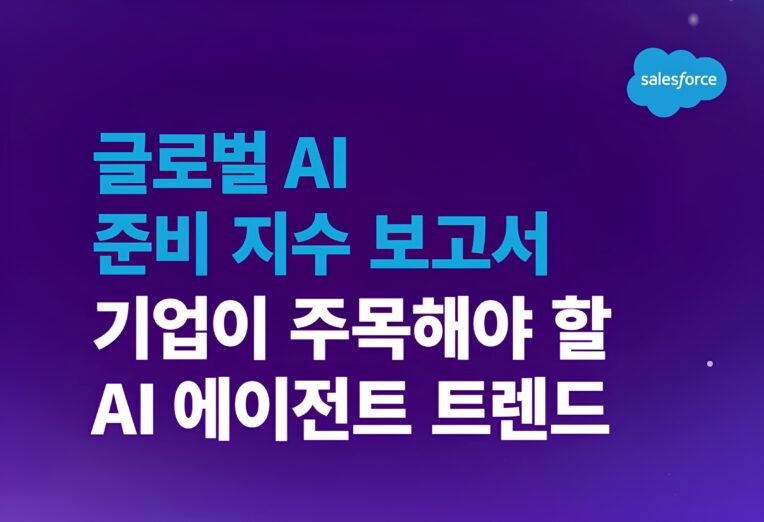
Salesforce, the global leader in AI CRM, has released its "Global AI Readiness Index," an in-depth analysis of global AI competitiveness and national preparedness. This report presents the level of readiness for AI agent technology adoption, national policies, and innovation directions for each industry, and is expected to serve as a key milestone for businesses and governments in developing future AI strategies.
This report's research targets 16 countries, including the United States, the United Kingdom, Singapore, Germany, and Canada, including Korea. It comprehensively analyzed each country's level of AI readiness based on five areas: regulatory framework, AI adoption level across industries and governments, AI ecosystem, investment environment, and talent and capability development.
According to the report, AI technology is evolving from predictive to generative, and then to AI agents, moving beyond simple automation to becoming a core technology that supports decision-making and execution. The report predicts that within the next two years, AI agent adoption will increase by approximately 327% compared to current levels.
Among the 16 countries, South Korea demonstrated strength in AI regulation and diffusion. Its regulatory framework score, which defines the legal and institutional foundation supporting AI adoption, earned it a 9 out of 10, ranking high alongside Singapore and the UK. Its establishment of a national AI strategy and data governance system also earned it high marks. Furthermore, its AI adoption and readiness score, which measures the level of AI adoption across industries and government agencies, earned it a 6.7. The rapid expansion of AI adoption in key industries such as manufacturing, smart cities, and logistics was cited as a particular strength.
On the other hand, in the AI ecosystem creation and investment category, which evaluates AI R&D performance, startup activities, and the level of industry-academia collaboration, Korea received a relatively low score of 1.8 points compared to major countries. While Korea demonstrated strengths in infrastructure and some applied technologies, it remains heavily reliant on large-scale computing resources and foundation model development compared to leading global countries. Furthermore, the investment environment score, which measures the inflow of private and public capital and venture capital activity, remained near the bottom at 0.8 points, highlighting the lack of capital access and investment networks as key constraints to the expansion of the Korean AI ecosystem. This suggests the need for comprehensive improvements to secure a driving force for growth and innovation in AI startups.
Other major countries also had different strengths and areas for improvement. The US, based on its R&D investment and startup ecosystem, secured unrivaled competitiveness in innovation and capital investment. Singapore received high marks for establishing a balanced model in regulation, diffusion, and talent. The UK and Canada garnered attention for their AI applications in healthcare and public services, as well as for their robust data governance. Germany, while expanding AI adoption based on its manufacturing competitiveness and vocational training system, showed weaknesses in attracting capital.
In this report, Salesforce emphasized the importance of collaboration between governments and industry to strengthen the competitiveness of AI agents in each country. In particular, it emphasized that expanding the integration of AI agents in the public sector to enhance citizen convenience and developing an interoperable governance framework for global regulatory coordination are crucial factors for AI success.
In addition, Salesforce recommended developing talent for the new AI work environment and establishing an investment environment to improve AI accessibility for small and medium-sized businesses. Furthermore, it explained that promoting AI governance and application models tailored to each industry's characteristics, and accelerating investment in cross-border R&D and safety standards to strengthen global cooperation, are key tasks for securing AI competitiveness in the global market.
Salesforce Korea CEO Son Bu-han stated, "Introducing AI agents and realizing their potential is akin to a car race. While some countries are racing at full speed on already prepared tracks and competing at the forefront, many are still in the process of establishing tires, roads, and traffic regulations to ensure the stable operation of these new engines." He added, "Salesforce will continue to strengthen its role as a trusted partner to help Korean companies quickly complete these preparations and achieve tangible results in AI-powered productivity innovation and new business value creation."
Meanwhile, Salesforce is building an environment where companies can safely and efficiently adopt and utilize AI technology, leveraging its AI agent platform, Agentforce. Agentforce supports a data cloud-based integrated data environment and the Einstein Trust Layer, enabling safe and effective AI innovation. Recently, the company has been actively strengthening educational programs such as hands-on workshops and hackathons to support the adoption of AI agent technology, as well as community activities that share insights based on real-world innovation cases.
You must be logged in to post a comment.