



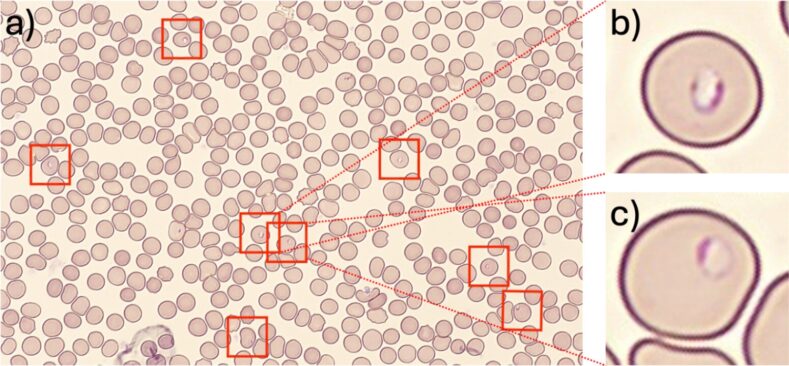
Noul Co., Ltd. (CEO Chan-Yang Lim, hereinafter referred to as Noul) announced that the latest research results on the AI diagnostic performance of its malaria diagnostic solution, "miLab™ MAL," were published in the Journal of Clinical Microbiology, an international academic journal in the field of clinical medicine. The research was conducted in collaboration with Labcorp, the largest diagnostic lab chain in the United States.
This study compared the results of standard microscopic examinations with those of Noul's miLab™ MAL diagnostics, based on 409 blood samples collected at LabCorp reference laboratories in the United States. Samples were collected from five regional laboratories: North Carolina, South Carolina, Virginia, the District of Columbia, and Maryland.
The study results showed that miLab™ MAL demonstrated superior diagnostic performance compared to standard microscopy, achieving 100% sensitivity, specificity, positive predictive value (PPV), and negative predictive value (NPV). Standard microscopy demonstrated a sensitivity of 81.8%, a specificity of 100%, a positive predictive value of 100%, and a negative predictive value of 99.5%.
Additionally, miLab™ MAL identified all false-negative cases missed by standard microscopy. In the study, while the standard microscopist diagnosed 399 of 408 samples as negative and 9 as positive, miLab™ MAL diagnosed 397 of the same samples as negative and 11 as positive. Two samples that were negative by microscopy were re-examined and found to have very low levels of parasitic infection (<0.1%) in both samples.
miLab™ MAL analyzes 200,000 red blood cells to identify parasites, providing approximately 200 times more data than standard microscopy, which only examines 1,000 red blood cells. Previous studies have shown that standard microscopy can miss more than 25% of malaria cases, making miLab™ MAL a groundbreaking tool that can deliver high diagnostic accuracy, especially in low-parasite environments.
With the increase in international travel since the pandemic, cases of malaria being imported into non-endemic countries have steadily increased. The United States recorded 1,823 imported malaria cases in 2018, the highest number in the past 20 years, and unusual infections were reported in some states, including Florida, Maryland, and Texas, in 2023. This situation highlights the need for AI-based malaria diagnostic solutions, such as Noul's miLab™ MAL.
- See more related articles
You must be logged in to post a comment.