



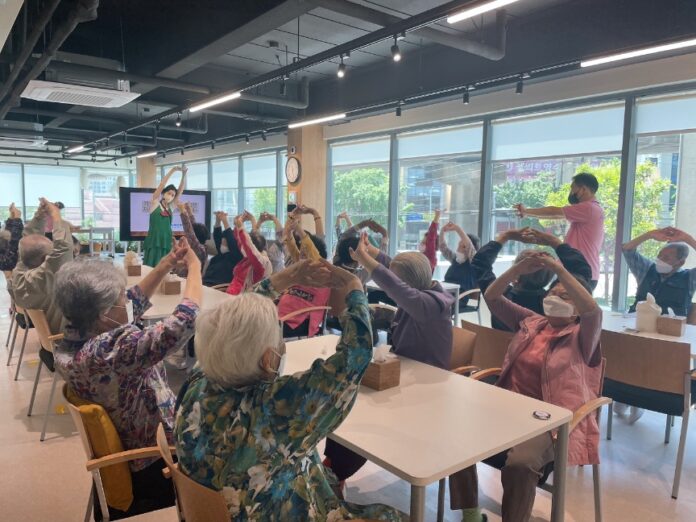
3pm, daily routine at the nursing home.
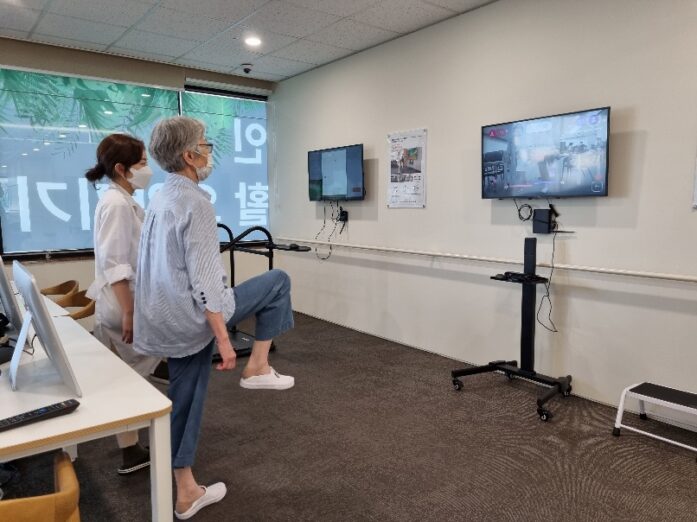
A daycare center in Yongin. Late in the afternoon, as the exercise program begins, the seniors begin specialized rehabilitation exercises on various exercise machines. A caregiver quietly approaches one senior who seems to be enjoying the program and continues to use the same machine without stopping.
"Teacher, even if it's fun, don't overdo it. Even if you're fine now, you might be tired tomorrow."
This is one of 58 centers nationwide directly operated by Caring. This company, which insists on direct management and quality service, is changing the nursing industry. We met with Caring founder and CEO Kim Tae-seong to find out.

From a game data analyst to a nursing business
"I've had a lot of fun working in various fields, including game data analysis and commerce, and I've achieved both big and small successes. But I've also had doubts about whether I want to do this for the rest of my life."
The beginning of CEO Taeseong Kim, who founded Caring in late 2019, was a coincidence.
"My mentor suggested I try my hand at the nursing care business. My aunt happens to be a nursing assistant, and I'd heard a lot about the field. Initially, I thought innovation would come from simply creating a system and leveraging technology to improve efficiency. But once I jumped in, I realized that caring for seniors was more important than technology. The key was how genuinely caring and attentive the center director, social workers, and nursing assistants working at Caring were to the elderly."
Caring has grown into an organization with 880 full-time employees and over 10,000 caregivers. Caring's defining characteristic is its "100% direct operation." This is the polar opposite of expanding rapidly by increasing franchises.
"While the expansion of the number of centers may seem slow, it allows us to focus more on seniors. Ultimately, I believe this is the fastest way forward. We are striving to improve the standard of nursing care through continuous education and management. It also allows us to continue making new investments centrally. Ultimately, I've become convinced that focusing solely on seniors is the fastest way to satisfy seniors."
How can caregivers be more respected?
The core strategy of this directly managed care system is to improve the treatment of caregivers. Higher-than-market salaries are a given, and severance pay is strictly protected.
Even more striking is the "culture of respect." From the "psychological counseling program" for caregivers to events like the "Love Caregivers Festival," and even the "Honorary Caregiver Selection," we believe everything ultimately hinges on respect for the people working there.
The results of these efforts are showing in numbers. Over 42,000 caregivers have applied to work at Caring. But this isn't simply due to the high salaries. It's the growing recognition that Caring respects its caregivers.
"While salary is important, feeling respected is even more important. Our salaries aren't incredibly high. We just strive to offer a little more than average. But I think people appreciate our efforts. While we're far from perfect, we're committed to working harder."
Caring adheres to a "people-centered" principle. Nevertheless, it actively utilizes AI and seeks to apply it to caregiving settings. "Caring Call," currently under internal development, analyzes conversations between seniors to detect signs of depression or cognitive decline.
Additionally, in residential spaces operated by Caring in collaboration with partners, various smart sensors are installed to measure seniors' breathing, movement, and heart rate in real time. Alarms are immediately sent in the event of an abnormality.
"Technology advances, but what matters is whether that technology improves the lives of seniors. I don't think technology is necessary for corporate promotion. I'm focusing on technologies that actually help seniors."
Integrated home care: The home should be the center of care.
CEO Kim Tae-seong focuses on "aging in place." In fact, 87% of seniors aged 65 and older said they want to "grow old in their current home."
Caring is developing an "integrated home care model" that connects services such as home visits, home bathing, and hospital accompaniment within a 3km radius, centered around day care centers. The data on approximately 12,000 seniors, accumulated over five years across 58 centers, is a core asset of Caring.
"No facility, no matter how wonderful, can replace the memories of a home where you've lived for decades. The home where a senior has lived should be the center of their care. Ideally, they should be able to receive the care they need in their own neighborhood. Because we directly manage all our care services, we can provide personalized services. Depending on their condition, we can assess whether they need home care or day care, and connect them with the most appropriate care service. I believe this is truly integrated care."
However, CEO Kim Tae-seong said that there is something more important than care.
"I believe prevention is more important than care. No matter how good Caring's nursing services are, no one wants to get sick early. Caring wants to be a company that helps seniors receive nursing services as late as possible. To achieve this, connecting with various resources in the community where seniors live is crucial. Caring's day care center aims to be the focal point connecting these resources."
I want to spread K-Care to the world.
"Care isn't a 'cost of aging,' it's a 'new opportunity.' Everyone grows old and needs help at some point."
CEO Kim Tae-seong believes in the global competitiveness of the Korean care model. He believes that combining IT infrastructure, advanced medical care, and advanced care services will enable a globally recognized "K-care."
"Care has been perceived solely as a cost. As a result, sick seniors are viewed as a social burden. If this continues, generational conflict will inevitably deepen in the long term. If costs are unavoidable, I believe we should strive to capitalize on them and foster them as an industry."

Next, CEO Kim Tae-seong brought up the oil industry.
"Thinking about oil in the past gives me an idea. If we only looked at it from the perspective of cost, which requires us to conserve oil, there would have been limitations. However, we have actually grown our 'oil industry,' becoming a country that exports oil. If we can achieve a similar shift in perspective in nursing care, we can view the aging population crisis as an opportunity. All developed countries are experiencing an aging population, and caregiving is a challenge for all countries. If Caring can contribute to this, I would be beyond grateful."
You must be logged in to post a comment.