




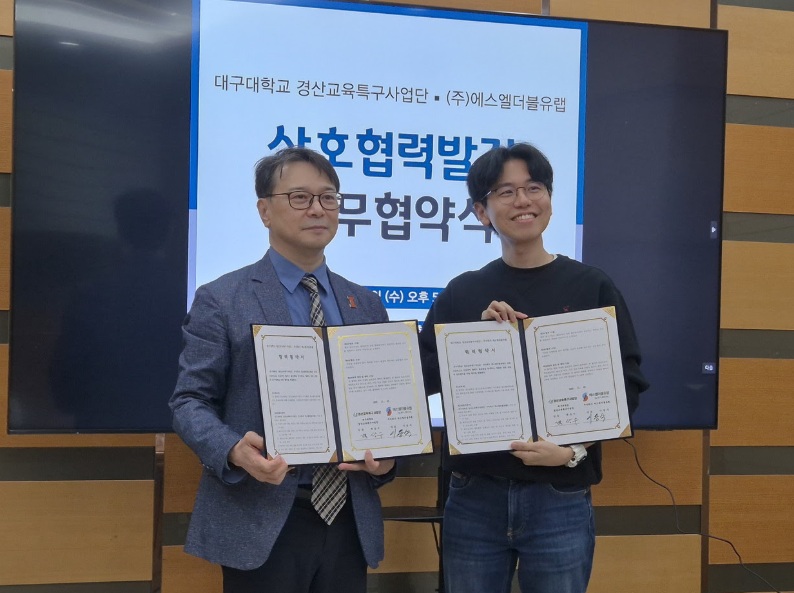
에스엘더블유랩(대표 이용석)은 지난 5일 대구대학교 성산홀에서 대구대학교 경산교육특구사업단(단장 백상수)과 ‘무장애 관광 환경 개선 및 지역사회 실증 연구 추진을 위한 상호협력발전 업무협약(MOU)’을 체결했다고 7일 밝혔다. 이번 협약은 대학과 민간연구기관이 협력해 지역사회 중심의 배리어프리(Barrier-Free) 관광 환경을 조성하고, 시민과 학생이 함께 참여하는 실증 연구 모델을 구축하기 위해 마련됐다.
양 기관은 이번 협약을 통해 ▲무장애 관광 환경 개선을 위한 리빙랩(Living Lab) 운영 ▲배리어프리 관광 콘텐츠 및 서비스 디자인 공동 연구 ▲예비교사 및 대학생 대상 장애인식 개선 교육 ▲데이터 기반 접근성 진단·분석 체계 구축 등 다방면에서 협력하기로 했다. 이를 통해 실질적 접근성 개선과 지역 사회의 포용적 관광 인프라 구축을 목표로 한다.
대구대학교 경산교육특구사업단 백상수 단장은 “이번 협약은 대학이 지역사회와 함께 성장하며 포용적이고 지속가능한 관광 환경을 만들어가는 첫걸음”이라며 “학문적 연구를 넘어 지역의 실제 문제를 해결하는 사회적 역할을 강화하겠다”고 밝혔다.
이용석 에스엘더블유랩 대표는 “대구대학교의 교육적 인프라와 지역 네트워크, 그리고 에스엘더블유랩의 데이터 기반 연구 역량이 결합하면 무장애 관광의 실질적 변화를 이끌 수 있다”며 “학생들이 현장에서 직접 문제를 탐구하고 지역과 함께 성장하는 교육 모델이 확산되길 기대한다”고 말했다.
- 관련 기사 더 보기
SLW Lab Signs MOU with Daegu University's Gyeongsan Education Special Zone Project Team
SLW Lab (CEO Yong-seok Lee) announced on the 7th that it signed a "MOU for Mutual Cooperation and Development for Improving Barrier-Free Tourism Environment and Promoting Community-Based Empirical Research" with the Daegu University Gyeongsan Education Special Zone Project Team (Director Sang-soo Baek) at Seongsan Hall at Daegu University on the 5th. This agreement was established to foster a community-centered barrier-free tourism environment through collaboration between universities and private research institutes and to establish an empirical research model in which citizens and students participate together.
Through this agreement, the two organizations agreed to collaborate on a variety of areas, including: operating a Living Lab to improve accessibility and tourism environments; joint research on barrier-free tourism content and service design; providing disability awareness training for prospective teachers and college students; and establishing a data-driven accessibility diagnostic and analysis system. The goal is to substantially improve accessibility and build an inclusive tourism infrastructure in local communities.
Baek Sang-soo, head of the Gyeongsan Education Special Zone Project at Daegu University, said, “This agreement is the first step toward the university growing together with the local community and creating an inclusive and sustainable tourism environment,” adding, “We will strengthen our social role by going beyond academic research and solving real-world problems in the region.”
Lee Yong-seok, CEO of SLW Lab, said, “The combination of Daegu University’s educational infrastructure and regional network, and SLW Lab’s data-driven research capabilities, can lead to real changes in accessible tourism. I hope that this educational model, where students directly explore problems in the field and grow together with the local community, will spread.”
- See more related articles
エスエルダブルユーラップ、大邱大学慶山教育特区事業団と業務協約締結
SLダブルユーラップ(代表イ・ヨンソク)は5日、大邱大学城山ホールで大邱大学軽山教育特区事業団(団長ペク・サンス)と「無障害観光環境改善及び地域社会実証研究推進のための相互協力発展業務協約(MOU)」を締結したと7日明らかにした。今回の協約は大学と民間研究機関が協力して地域社会中心のバリアフリー(Barrier-Free)観光環境を造成し、市民と学生が共に参加する実証研究モデルを構築するために設けられた。
両機関は今回の協約を通じて▲無障害観光環境改善のためのリビングラップ(Living Lab)運営▲バリアフリー観光コンテンツ及びサービスデザイン共同研究▲予備教師及び大学生対象障害認識改善教育▲データ基盤のアクセシビリティ診断・分析体系の構築など多方面で協力することにした。これにより、実質的なアクセシビリティの改善と地域社会の包括的な観光インフラの構築を目指す。
大邱大学慶山教育特区事業団ペク・サンス団長は「今回の協約は大学が地域社会とともに成長し包容的で持続可能な観光環境を作っていく第一歩」とし「学問的研究を超えて地域の実際の問題を解決する社会的役割を強化する」と明らかにした。
イ・ヨンソクエスエルダブルユーラップ代表は「大邱大学の教育的インフラと地域ネットワーク、そしてエスエルダブルユーラップのデータ基盤研究能力が結合すれば無障害観光の実質的な変化を導くことができる」とし「学生たちが現場で直接問題を探求し、地域とともに成長する教育モデルが広がることを期待する」と話した。
- 関連記事をもっと見る
SLW实验室与大邱大学庆山教育特区项目组签署合作备忘录
SLW Lab(CEO 李容锡)于7日宣布,已于5日在大邱大学城山礼堂与大邱大学庆山教育特区项目组(主任白相洙)签署了“改善无障碍旅游环境及促进社区实证研究合作开发谅解备忘录”。该协议旨在通过大学与私营研究机构的合作,营造以社区为中心的无障碍旅游环境,并建立市民和学生共同参与的实证研究模式。
通过这项协议,双方同意在多个领域开展合作,包括:运营一个生活实验室以改善无障碍环境和旅游设施;联合开展无障碍旅游内容和服务设计研究;为准教师和大学生提供残障意识培训;以及建立数据驱动的无障碍诊断和分析系统。其目标是显著提升当地社区的无障碍环境,并构建包容性的旅游基础设施。
大邱大学庆山教育特区项目负责人白相洙表示:“这项协议是大学与当地社区共同发展,创造包容和可持续旅游环境的第一步。”他补充道:“我们将超越学术研究,解决该地区的实际问题,从而加强我们的社会作用。”
SLW Lab首席执行官李勇锡表示:“大邱大学的教育基础设施和区域网络,加上SLW Lab的数据驱动研究能力,能够真正推动无障碍旅游的发展。我希望这种学生直接探索实地问题、与当地社区共同成长的教育模式能够得到推广。”
- 查看更多相关文章
SLW Lab signe un protocole d'entente avec l'équipe du projet de la zone spéciale d'éducation de Gyeongsan de l'Université de Daegu
Le laboratoire SLW (PDG Yong-seok Lee) a annoncé le 7 avoir signé un protocole d'accord de coopération et de développement mutuels visant à améliorer l'accessibilité touristique et à promouvoir la recherche empirique communautaire avec l'équipe du projet de la zone spéciale d'éducation de Gyeongsan de l'Université de Daegu (directeur Sang-soo Baek). La signature a eu lieu le 5 à l'amphithéâtre Seongsan de l'Université de Daegu. Cet accord a pour objectif de favoriser un environnement touristique inclusif et axé sur la communauté grâce à la collaboration entre les universités et les instituts de recherche privés, et de mettre en place un modèle de recherche empirique impliquant citoyens et étudiants.
Aux termes de cet accord, les deux organisations se sont engagées à collaborer dans divers domaines, notamment : la mise en place d’un laboratoire vivant pour améliorer l’accessibilité et les environnements touristiques ; des recherches conjointes sur le contenu et la conception de services touristiques sans obstacles ; la formation à la sensibilisation au handicap pour les futurs enseignants et les étudiants ; et la création d’un système de diagnostic et d’analyse de l’accessibilité basé sur les données. L’objectif est d’améliorer sensiblement l’accessibilité et de développer une infrastructure touristique inclusive au sein des communautés locales.
Baek Sang-soo, responsable du projet de zone spéciale d'éducation de Gyeongsan à l'université de Daegu, a déclaré : « Cet accord est la première étape vers une croissance conjointe de l'université et de la communauté locale, ainsi que vers la création d'un environnement touristique inclusif et durable », ajoutant : « Nous renforcerons notre rôle social en allant au-delà de la recherche universitaire et en résolvant les problèmes concrets de la région. »
Lee Yong-seok, PDG de SLW Lab, a déclaré : « L’alliance de l’infrastructure éducative et du réseau régional de l’Université de Daegu avec les capacités de recherche de SLW Lab, fondées sur les données, peut engendrer de véritables changements dans le tourisme accessible. J’espère que ce modèle pédagogique, où les étudiants explorent directement les problématiques de terrain et évoluent en collaboration avec la communauté locale, se généralisera. »
- Voir plus d'articles connexes
You must be logged in to post a comment.